










Breaking News
 "Begin Preparing Yourself..." - Jeffrey Sachs
 The 5-Year Treasury Just Broke 5%... The Whole Curve Is Next
 ICE Denounced for Enacting 'Official Government Policy of Disappearing People'
 Google Just Told Canadian Adults: Give Us Your ID and a Selfie Or Else…And It's Starting Now!!
Top Tech News
 Tesla Model 3 killer charges from 10 to 97% in just 9 minutes
 World-first unpowered DNA computer sets speed record
 I Power 5 Buildings Off-Grid. Here's How
 The US government is pushing hard to get a working nuclear fission reactor into space by late 2028
 SpaceX Starmind AI in Space Radiator
 China Will Dominate Global Nuclear Energy Through 2035, Analyst Says
 These Absolutely Wild-Looking EVs Are Saudi Arabia's First Homegrown Cars
 BEYOND THE MOON: NASA plans a nuclear-powered fleet to push DEEPER into space
 Big Oil Backs Mazama's $135 Million Bet On Superhot Geothermal
 Quantum compass takes flight on Northrop's Lumberjack drone


DARPA funds nanoscale magnetic materials for super computer memory and quantum info processing
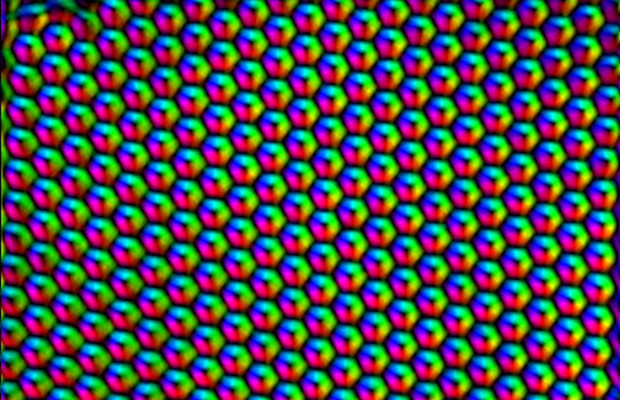
The Ohio State collaborators are one of a handful of successful teams to win this award in an international competition as part of DARPA's Topological Excitations in Electronics (TEE) program. TEE endeavors to design materials with new, controllable functionalities in memory, logic, sensors and quantum information processing — all having critical implications for the nation's economic, energy and defense security.
In magnetic memories, information (for example, a collection of bits) is stored as clusters of spins, which are either an up or a down (or put differently, a one or a zero). These spin clusters, which form the basis of magnetic memories, become less stable when reduced in size.
"As the spin clusters become smaller and smaller, the memory becomes volatile," says Mohit Randeria, professor of physics and principal investigator on the DARPA grant. "Even minor fluctuations due to thermal disturbances at room temperature could lead to spin directions flipping and information being lost."