










Breaking News
 This is the future we shall bring into being
 Elon Musk's Vision For The Future Looks Like A Movie
 Phosphorus Munitions Fired by Israel Burn Groves, Orchards in Southern Lebanon
 Iran's IRGC Warns It Will Expand 'Geography of the War' If the US Attacks Again
Top Tech News
 BEYOND THE MOON: NASA plans a nuclear-powered fleet to push DEEPER into space
 Big Oil Backs Mazama's $135 Million Bet On Superhot Geothermal
 Quantum compass takes flight on Northrop's Lumberjack drone
 Terrifying AI Behavior Even Its Creators Couldn't Explain
 WW3 Near-Miss? AI Hallucinated Nuclear Weapons Components Aboard Chinese Vessel Bound For Iran
 Stripe Is Building the Toll Road for the Machine Economy
 Toyota Dakar hopeful swaps twin-turbo V6 for hydrogen fuel cells
 4-min turbo-inflatable cubic camp castle is now available in the USA
 Researchers Used Claude To Hack OpenAI Employee Accounts
 Chinese Scientists Develop New Oil Refining Method That Cuts Energy Use by 90%



Heating and ventilating a 10,000 person space station
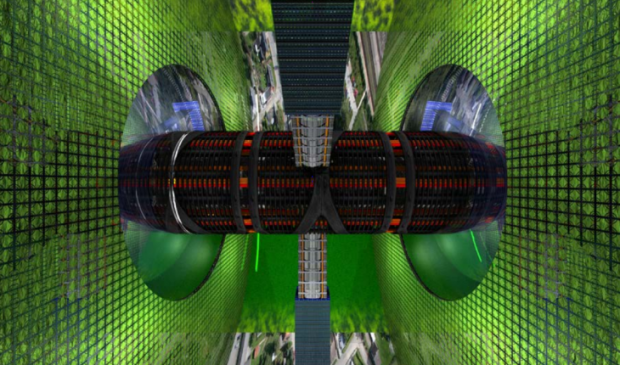
This allows a more detailed analysis than was possible in most theoretical precursor studies and enables comparison and validation of aspects of the design with the International Space Station, McMurdo Station in Antartica, Biosphere 2 and the Stanford Torus and Kalpana designs.
Above – Interior view showing end-cap greenhouses and window rings surrounding the hub air-duct. Transfer shafts within the tower blocks connect to "ground level" urban areas separated by farms.
The biggest lighting challenge within a large open space habitat is to illuminate the interior to a level commensurate with human comfort and wellbeing and sufficient for food crops without generating unmanageable amounts of waste heat.