










Breaking News
 The Download: GLOBAL WAR LOOMING, GOVERNMENT AT YOUR DOOR & DOCTORS...
 Episode 495: AI'S FREE PASS, NIH FINALLY WAKES UP & CHILDHOOD DEATH BOMBSHELL
 Xi backs AI safety with Trump, draws Taiwan line, urges Iran talks
 The Israeli Lobby Boasts of Its Rule of America
Top Tech News
 Tesla Model 3 killer charges from 10 to 97% in just 9 minutes
 World-first unpowered DNA computer sets speed record
 I Power 5 Buildings Off-Grid. Here's How
 The US government is pushing hard to get a working nuclear fission reactor into space by late 2028
 SpaceX Starmind AI in Space Radiator
 China Will Dominate Global Nuclear Energy Through 2035, Analyst Says
 These Absolutely Wild-Looking EVs Are Saudi Arabia's First Homegrown Cars
 BEYOND THE MOON: NASA plans a nuclear-powered fleet to push DEEPER into space
 Big Oil Backs Mazama's $135 Million Bet On Superhot Geothermal
 Quantum compass takes flight on Northrop's Lumberjack drone


Building better batteries using crumpled graphene balls
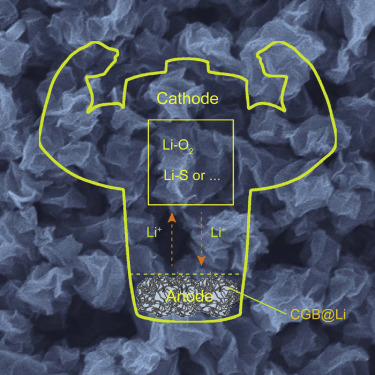
Although they promise to hold much more energy per charge, they do have shortcomings in their current form, particularly when it comes to safety. Engineers at Northwestern University are now claiming to have overcome these failings by making use of crumpled balls of graphene that fall into line as a scaffold when the battery is charging.
"In current batteries, lithium is usually atomically distributed in another material such as graphite or silicon in the anode," explains Northwestern Engineering's Jiaxing Huang. "But using an additional material 'dilutes' the battery's performance. Lithium is already a metal, so why not use lithium by itself?"
The reason is dendrites, which are microscopic lithium fibers that accumulate on the surface of the anode as the battery charges.