










Breaking News
 The Download: GLOBAL WAR LOOMING, GOVERNMENT AT YOUR DOOR & DOCTORS...
 Episode 495: AI'S FREE PASS, NIH FINALLY WAKES UP & CHILDHOOD DEATH BOMBSHELL
 Xi backs AI safety with Trump, draws Taiwan line, urges Iran talks
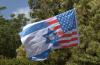 The Israeli Lobby Boasts of Its Rule of America
Top Tech News
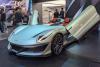 Tesla Model 3 killer charges from 10 to 97% in just 9 minutes
 World-first unpowered DNA computer sets speed record
 I Power 5 Buildings Off-Grid. Here's How
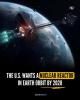 The US government is pushing hard to get a working nuclear fission reactor into space by late 2028
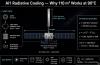 SpaceX Starmind AI in Space Radiator
 China Will Dominate Global Nuclear Energy Through 2035, Analyst Says
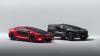 These Absolutely Wild-Looking EVs Are Saudi Arabia's First Homegrown Cars
 BEYOND THE MOON: NASA plans a nuclear-powered fleet to push DEEPER into space
 Big Oil Backs Mazama's $135 Million Bet On Superhot Geothermal
 Quantum compass takes flight on Northrop's Lumberjack drone


Blue Origin reveals first commercial payloads

The payloads, which ranged from artworks to medical experiments, were lofted into space at an altitude of 100 km (62 mi) during the 11 minute flight where they were subjected to three minutes of free fall.
On December 12 at 10:59 CST, the reusable New Shepard booster lifted off from the Blue Origin test site in West Texas. During the flight it reached a maximum ascent velocity of Mach 2.94 (2,000 mph, 3,200 km/h) and a maximum descent velocity of Mach 3.74 (2,847 mph, 4.582 km/h) on the way back to Earth.
Though unmanned, the prototype Crew Capsule 2.0 had a "passenger" in the form of "Mannequin Skywalker," an instrument-laden test dummy designed to return flight telemetry. But Blue Origin is also trying to promote the launch system as a platform for suborbital research that can be launched multiple times at low cost for repeat experiments.