










Breaking News
 This is the future we shall bring into being
 Elon Musk's Vision For The Future Looks Like A Movie
 Phosphorus Munitions Fired by Israel Burn Groves, Orchards in Southern Lebanon
 Iran's IRGC Warns It Will Expand 'Geography of the War' If the US Attacks Again
Top Tech News
 BEYOND THE MOON: NASA plans a nuclear-powered fleet to push DEEPER into space
 Big Oil Backs Mazama's $135 Million Bet On Superhot Geothermal
 Quantum compass takes flight on Northrop's Lumberjack drone
 Terrifying AI Behavior Even Its Creators Couldn't Explain
 WW3 Near-Miss? AI Hallucinated Nuclear Weapons Components Aboard Chinese Vessel Bound For Iran
 Stripe Is Building the Toll Road for the Machine Economy
 Toyota Dakar hopeful swaps twin-turbo V6 for hydrogen fuel cells
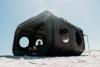 4-min turbo-inflatable cubic camp castle is now available in the USA
 Researchers Used Claude To Hack OpenAI Employee Accounts
 Chinese Scientists Develop New Oil Refining Method That Cuts Energy Use by 90%



Want to build an igloo? Here's how.
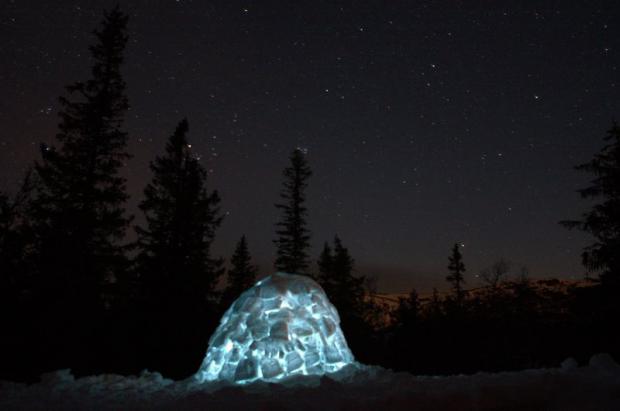
. He once told the class, "I want to be drinking in a snow bar by Friday." His students went outside and got to work, and sure enough, "we had 50 people inside the snow bar by Friday afternoon."Sijpke is originally from Holland, where water is usually found in liquid form. So when he moved to Canada, he was fascinated by snow and ice. To him, frozen water is a fantastic (and free) building material. He's built some seriously impressive structures out of snow and ice—including a 1/5-scale model of the Roman Pantheon. The 32.7-foot tall, 32.7-foot diameter structure was made from 400 tons of snow. More than 125 McGill students and faculty squeezed inside its walls, which were four feet thick.
So Popular Science asked Sijpke how to build an igloo. "Scientifically, the best way is how the Inuit in the North still do it," he says. "They lay snow blocks in a spiral."