










Breaking News
 The Download: GLOBAL WAR LOOMING, GOVERNMENT AT YOUR DOOR & DOCTORS...
 Episode 495: AI'S FREE PASS, NIH FINALLY WAKES UP & CHILDHOOD DEATH BOMBSHELL
 Xi backs AI safety with Trump, draws Taiwan line, urges Iran talks
 The Israeli Lobby Boasts of Its Rule of America
Top Tech News
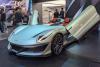 Tesla Model 3 killer charges from 10 to 97% in just 9 minutes
 World-first unpowered DNA computer sets speed record
 I Power 5 Buildings Off-Grid. Here's How
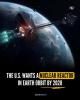 The US government is pushing hard to get a working nuclear fission reactor into space by late 2028
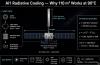 SpaceX Starmind AI in Space Radiator
 China Will Dominate Global Nuclear Energy Through 2035, Analyst Says
 These Absolutely Wild-Looking EVs Are Saudi Arabia's First Homegrown Cars
 BEYOND THE MOON: NASA plans a nuclear-powered fleet to push DEEPER into space
 Big Oil Backs Mazama's $135 Million Bet On Superhot Geothermal
 Quantum compass takes flight on Northrop's Lumberjack drone


Nuclear powered drones are technically feasible and could fly for years
China has put $3.3 billion into making new highly compact nuclear reactors which would also use for nuclear powered drones.
The potential impact of nuclear-powered drones can be seen by comparing them with existing aircraft such as the MQ-9 Reaper, which is used extensively in Afghanistan and Pakistan in operations against insurgents. The Reaper presently carries nearly two tonnes of fuel in addition a similar weight of munitions and other equipment and can stay airborne for around 42 hours, or just 14 hours when fully loaded with munitions.
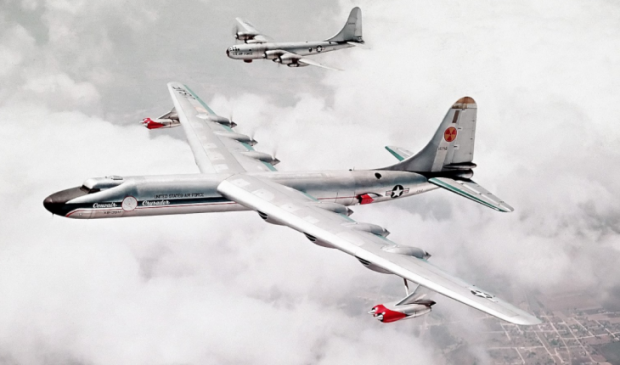
Above – An air-to-air view of the Convair NB-36H Peacemaker experimental aircraft (s/n 51-5712) and a Boeing B-50 Superfortress chase plane during research and development taking place at the Convair plant at Forth Worth, Texas (USA). The NB-36H was originally a B-36H-20-CF damaged at Carswell Air Force Base, also at Forth Worth, by a tornado on 1 September 1952. This plane was called the Nuclear Test Aircraft (NTA) and was redesignated XB-36H, then NB-36H, and was modified to carry a three megawatt, air-cooled nuclear reactor in its bomb bay.