










Breaking News
 The Download: GLOBAL WAR LOOMING, GOVERNMENT AT YOUR DOOR & DOCTORS...
 Episode 495: AI'S FREE PASS, NIH FINALLY WAKES UP & CHILDHOOD DEATH BOMBSHELL
 Xi backs AI safety with Trump, draws Taiwan line, urges Iran talks
 The Israeli Lobby Boasts of Its Rule of America
Top Tech News
 Tesla Model 3 killer charges from 10 to 97% in just 9 minutes
 World-first unpowered DNA computer sets speed record
 I Power 5 Buildings Off-Grid. Here's How
 The US government is pushing hard to get a working nuclear fission reactor into space by late 2028
 SpaceX Starmind AI in Space Radiator
 China Will Dominate Global Nuclear Energy Through 2035, Analyst Says
 These Absolutely Wild-Looking EVs Are Saudi Arabia's First Homegrown Cars
 BEYOND THE MOON: NASA plans a nuclear-powered fleet to push DEEPER into space
 Big Oil Backs Mazama's $135 Million Bet On Superhot Geothermal
 Quantum compass takes flight on Northrop's Lumberjack drone


Samsung begins production on 512 GB flash storage for smartphones
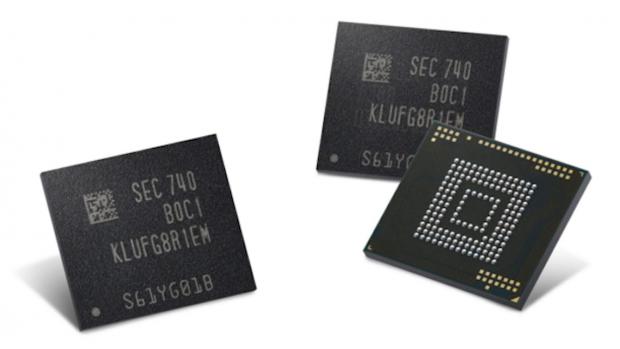
Samsung has been producing V-NAND devices for the last few years, which are three-dimensional stacks of flash storage chips. This newest device is made up of eight 64-layer V-NAND chips and a controller chip, which will boost the storage capacity of the eUFS up to 512 GB. That's twice the storage capacity of the previous model, which contained 48 layers.
For reference, Samsung says a user could store about 1,300 minutes of 4K video on a device built with the new eUFS, which is about 10 times more than can be crammed onto a Samsung Galaxy S8.
The new eUFC can also read and write faster, with its sequential read speeds peaking at 860 MB/s, and write speeds of up to 255 MB/s. According to the company, that means a 5 GB video file could be transferred to an SSD in about six seconds. The power management technology in the new device has also been updated, in order to keep the increase in energy consumption to a minimum.