










Breaking News
 The Download: GLOBAL WAR LOOMING, GOVERNMENT AT YOUR DOOR & DOCTORS...
 Episode 495: AI'S FREE PASS, NIH FINALLY WAKES UP & CHILDHOOD DEATH BOMBSHELL
 Xi backs AI safety with Trump, draws Taiwan line, urges Iran talks
 The Israeli Lobby Boasts of Its Rule of America
Top Tech News
 Tesla Model 3 killer charges from 10 to 97% in just 9 minutes
 World-first unpowered DNA computer sets speed record
 I Power 5 Buildings Off-Grid. Here's How
 The US government is pushing hard to get a working nuclear fission reactor into space by late 2028
 SpaceX Starmind AI in Space Radiator
 China Will Dominate Global Nuclear Energy Through 2035, Analyst Says
 These Absolutely Wild-Looking EVs Are Saudi Arabia's First Homegrown Cars
 BEYOND THE MOON: NASA plans a nuclear-powered fleet to push DEEPER into space
 Big Oil Backs Mazama's $135 Million Bet On Superhot Geothermal
 Quantum compass takes flight on Northrop's Lumberjack drone


Nanoparticles home in on cancer stem cells in promising new therapy
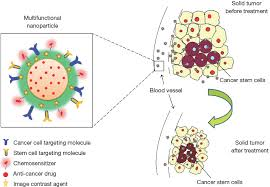
The ability to engineer particles that can enter a human body and transport a drug directly to a targeted cell is revolutionizing how medicine is delivered. A team of researchers from the University of Illinois has now created a new nanoparticle therapy that can target and destroy cancer stem cells to stop the disease returning.
The fear of relapse is one that constantly haunts cancer patients after any initial treatment has moved the disease into remission, but understanding how and why cancer returns eluded scientists for many years. In the mid-1990s, researcher John Dick first identified cancer stem cells, upending the field of cancer research and pointing to an entirely new area of study for scientists.
The discovery was that some cancers can be generated by these cancer stem cells (CSCs), and many existing treatments, while effective in destroying fast-growing cancer cells, completely miss these CSCs.