










Breaking News
 Walter Block Ejected From Mises Institute Over Defense Of Israel After October 7th
 The Permission Grid: A Blueprint for a Permanent Slave Class
 Banning The Export of Diesel Will Only Make A Bad Situation Worse
 SCARY, DARK, DIRECT, But Is It TRUE? You Decide
Top Tech News
 Tesla Model 3 killer charges from 10 to 97% in just 9 minutes
 World-first unpowered DNA computer sets speed record
 I Power 5 Buildings Off-Grid. Here's How
 The US government is pushing hard to get a working nuclear fission reactor into space by late 2028
 SpaceX Starmind AI in Space Radiator
 China Will Dominate Global Nuclear Energy Through 2035, Analyst Says
 These Absolutely Wild-Looking EVs Are Saudi Arabia's First Homegrown Cars
 BEYOND THE MOON: NASA plans a nuclear-powered fleet to push DEEPER into space
 Big Oil Backs Mazama's $135 Million Bet On Superhot Geothermal
 Quantum compass takes flight on Northrop's Lumberjack drone


Moon, Mars, Asteroid and orbital colonzation and cities
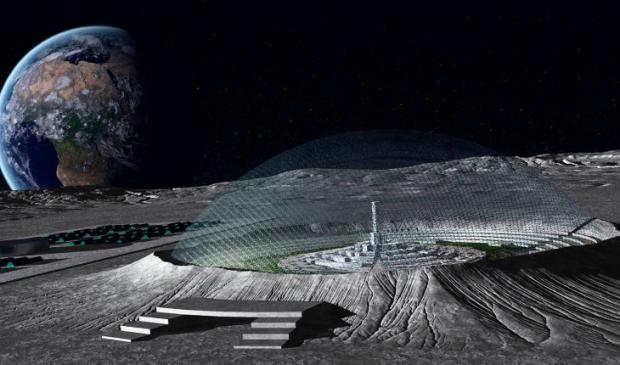
Eighty-five percent of the rocks on the surface of the lunar highlands are anorthite, which contains aluminum as well as a massive supply of oxygen. Smelting aluminum in the quantities necessary to construct and maintain Artemis would produce so much excess oxygen—eight atoms for every two of aluminum—that they would be constantly venting it.
For every kilogram of payload, you need an additional 3.73 kilos of fuel. So a one-way ticket to the moon is calculated to eventually cost about $33,000.
Moon, Mars or Asteroids for colonies
Where will humans live in space? That was the focus of a good-natured debate that took place at this week's "New Space Age" conference at Seattle's Museum of Flight.