










Breaking News
 Walter Block Ejected From Mises Institute Over Defense Of Israel After October 7th
 The Permission Grid: A Blueprint for a Permanent Slave Class
 Banning The Export of Diesel Will Only Make A Bad Situation Worse
 SCARY, DARK, DIRECT, But Is It TRUE? You Decide
Top Tech News
 Tesla Model 3 killer charges from 10 to 97% in just 9 minutes
 World-first unpowered DNA computer sets speed record
 I Power 5 Buildings Off-Grid. Here's How
 The US government is pushing hard to get a working nuclear fission reactor into space by late 2028
 SpaceX Starmind AI in Space Radiator
 China Will Dominate Global Nuclear Energy Through 2035, Analyst Says
 These Absolutely Wild-Looking EVs Are Saudi Arabia's First Homegrown Cars
 BEYOND THE MOON: NASA plans a nuclear-powered fleet to push DEEPER into space
 Big Oil Backs Mazama's $135 Million Bet On Superhot Geothermal
 Quantum compass takes flight on Northrop's Lumberjack drone


IBM has 50 qubit prototype chip which should be close to Quantum Supremacy
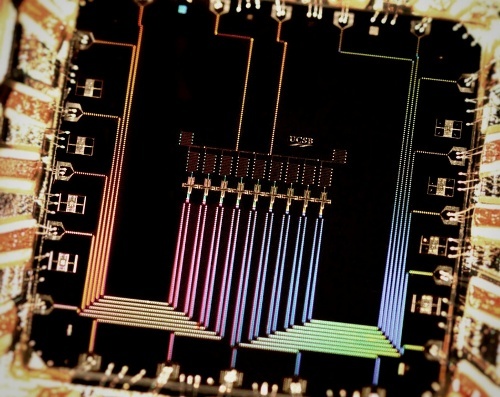
Doubling the transistors on a regular chip might achieve double the performance doubling the qubits on a quantum computer can provide an exponential speedup depending upon the kind of problem it is trying to solve. Dwave has shown speed ups of 10,000 time or more by doubling the qubits in their quantum annealing systems.
IBM Q scientists have successfully built and measured a 50 qubit processor prototype. Expanding on the 20 qubit architecture, it will be the next-gen IBM Q system. IBM aims to demonstrate capabilities beyond today's classical systems with systems of this size.
The first IBM Q systems available online to clients will have a 20 qubit processor. This new device's advanced design, connectivity and packaging delivers industry-leading coherence times (the amount of time to perform quantum computations), which are double that of IBM's 5 and 16 qubit processors available to the public on the IBM Q experience.