










Breaking News
 Walter Block Ejected From Mises Institute Over Defense Of Israel After October 7th
 The Permission Grid: A Blueprint for a Permanent Slave Class
 Banning The Export of Diesel Will Only Make A Bad Situation Worse
 SCARY, DARK, DIRECT, But Is It TRUE? You Decide
Top Tech News
 Tesla Model 3 killer charges from 10 to 97% in just 9 minutes
 World-first unpowered DNA computer sets speed record
 I Power 5 Buildings Off-Grid. Here's How
 The US government is pushing hard to get a working nuclear fission reactor into space by late 2028
 SpaceX Starmind AI in Space Radiator
 China Will Dominate Global Nuclear Energy Through 2035, Analyst Says
 These Absolutely Wild-Looking EVs Are Saudi Arabia's First Homegrown Cars
 BEYOND THE MOON: NASA plans a nuclear-powered fleet to push DEEPER into space
 Big Oil Backs Mazama's $135 Million Bet On Superhot Geothermal
 Quantum compass takes flight on Northrop's Lumberjack drone


Electric Lamborghini Terzo Millennio Houses Battery In Body, Sports 4 In-Wheel Motors
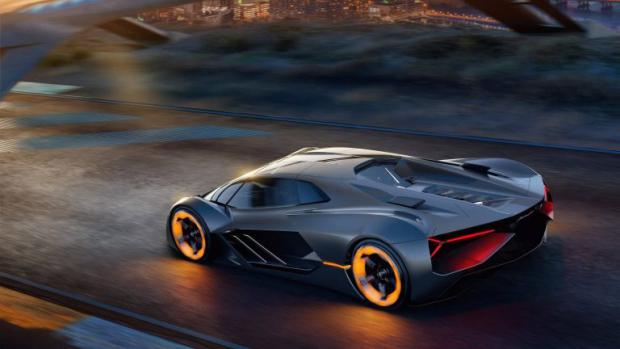
Smack in the middle of congested Boston, Massachusetts is far from where I imagine myself when I think about hanging out with the Lamborghini team. But however far the campus of the Massachusetts Institute of Technology may be from a mountain road or a race track, today, the future of fast cars lives here.
The Italian supercar company has partnered with some very smart folks at MIT, and the result is an all-new, wildly innovative concept car, called Terzo Millennio. Italian for "Third Millennium," the electrically propelled machine would seem to point the way forward for Lamborghini design and engineering. In fact, chairman and CEO of Lamborghini, Stefano Domenicali, called the collaboration, "an important page in the future of the super sports car for the third millennium."
Let's get one thing straight right away, though, about that third millennium bit. The term is code for tech and design that could come to fruition in the distant future… not the next generation of Lamborghini. More on this in a bit.
The automaker has partnered with MIT for the development of advanced energy storage systems, as well as to push the envelope in terms of material science. Specifically, Professor Mircea Dinca from MIT's Department of Chemistry and Professor Anastasios John Hart from the Department of Mechanical Engineering have lead the charge, along with Lamborghini's R&D pros.