










Breaking News
 Walter Block Ejected From Mises Institute Over Defense Of Israel After October 7th
 The Permission Grid: A Blueprint for a Permanent Slave Class
 Banning The Export of Diesel Will Only Make A Bad Situation Worse
 SCARY, DARK, DIRECT, But Is It TRUE? You Decide
Top Tech News
 Tesla Model 3 killer charges from 10 to 97% in just 9 minutes
 World-first unpowered DNA computer sets speed record
 I Power 5 Buildings Off-Grid. Here's How
 The US government is pushing hard to get a working nuclear fission reactor into space by late 2028
 SpaceX Starmind AI in Space Radiator
 China Will Dominate Global Nuclear Energy Through 2035, Analyst Says
 These Absolutely Wild-Looking EVs Are Saudi Arabia's First Homegrown Cars
 BEYOND THE MOON: NASA plans a nuclear-powered fleet to push DEEPER into space
 Big Oil Backs Mazama's $135 Million Bet On Superhot Geothermal
 Quantum compass takes flight on Northrop's Lumberjack drone


Particle Physics Discovery...
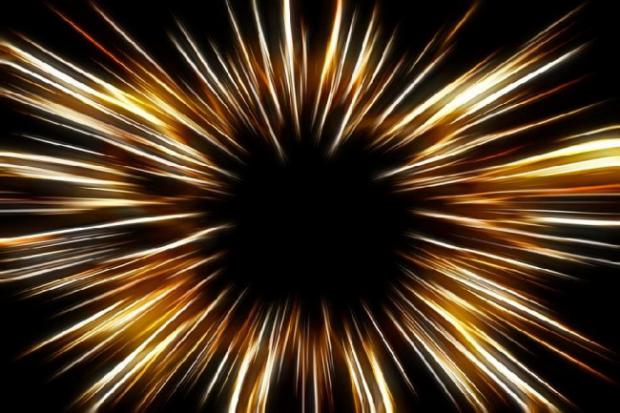
Melting elementary particles such as quarks can produce amounts of energy so massive it is equivalent to 10 times that of nuclear fusion, researchers have reported.
Quarks
Quarks are the most basic building blocks of matter. The protons and neutrons that make up matter are composed of quarks. Unlike protons and electrons, which have charges of +1 and -1, however, quarks have fractional electric charge. Quarks that are joined together form composite particles called hadrons. Quarks come in six flavors namely: up, down, top, bottom, strange, and charm.
Fusion Of Quarks Can Produce Massive Amount Of Energy
In a new study, researchers showed that two bottom quarks could theoretically fuse together in a powerful flash that can result in massive amount of energy that can spill out into the universe.
The fusion of two bottom quarks will produce 138 megaelectronvolts (MeV), which is eight times more powerful than individual nuclear fusion events inside a hydrogen bomb.