










Breaking News
 Walter Block Ejected From Mises Institute Over Defense Of Israel After October 7th
 The Permission Grid: A Blueprint for a Permanent Slave Class
 Banning The Export of Diesel Will Only Make A Bad Situation Worse
 SCARY, DARK, DIRECT, But Is It TRUE? You Decide
Top Tech News
 Tesla Model 3 killer charges from 10 to 97% in just 9 minutes
 World-first unpowered DNA computer sets speed record
 I Power 5 Buildings Off-Grid. Here's How
 The US government is pushing hard to get a working nuclear fission reactor into space by late 2028
 SpaceX Starmind AI in Space Radiator
 China Will Dominate Global Nuclear Energy Through 2035, Analyst Says
 These Absolutely Wild-Looking EVs Are Saudi Arabia's First Homegrown Cars
 BEYOND THE MOON: NASA plans a nuclear-powered fleet to push DEEPER into space
 Big Oil Backs Mazama's $135 Million Bet On Superhot Geothermal
 Quantum compass takes flight on Northrop's Lumberjack drone


Blizzident promises one bite flossing
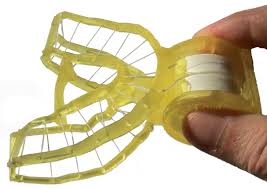
The American Dental Association, like many oral hygiene bodies around the globe, recommends cleaning between teeth at least once per day. Generally, this is done using a strand of dental floss to get into the small gaps that toothbrushes just can't reach. Though important, it does take time. What if you could floss all your teeth in one bite? That's what Blizzident is promising with its 3D-Flosser.
In 2013, Blizzident released a tailored toothbrush design which looked like a mouth guard that had melted in a microwave oven, and was claimed to give teeth a full and complete clean in just 6 seconds.
Before folks could get their funny-looking toothbrush though, they would need to visit a dentist to get a 3D scan or impression made. This would be sent to Blizzident, and a 3D-printed "negative" of the teeth produced, and lined with angled bristles. Brushing was then a simple matter of biting up and down, and having a good old grind.
The pre-production process for the 3D-Flosser is similar. Once Blizzident receive a customer's 3D scan, a user-specific frame is made. Four rolls of dental floss in the grip are fed through channels in the frame so that each gap in a user's teeth is covered by a short strand of floss. All a rapid flosser has to do is bite down on the frame, and the floss slides between the teeth to a depth of around 2 mm. Job done.