










Breaking News
 Trump has made 'final decision' to give Ukraine licence to make Patriot missiles, says Zelen
 Walter Block Ejected From Mises Institute Over Defense Of Israel After October 7th
 The Permission Grid: A Blueprint for a Permanent Slave Class
 Banning The Export of Diesel Will Only Make A Bad Situation Worse
Top Tech News
 Tesla Model 3 killer charges from 10 to 97% in just 9 minutes
 World-first unpowered DNA computer sets speed record
 I Power 5 Buildings Off-Grid. Here's How
 The US government is pushing hard to get a working nuclear fission reactor into space by late 2028
 SpaceX Starmind AI in Space Radiator
 China Will Dominate Global Nuclear Energy Through 2035, Analyst Says
 These Absolutely Wild-Looking EVs Are Saudi Arabia's First Homegrown Cars
 BEYOND THE MOON: NASA plans a nuclear-powered fleet to push DEEPER into space
 Big Oil Backs Mazama's $135 Million Bet On Superhot Geothermal
 Quantum compass takes flight on Northrop's Lumberjack drone


X3 ion thruster achieves record 102 kilowatts of power and 5.4 newtons of thrust
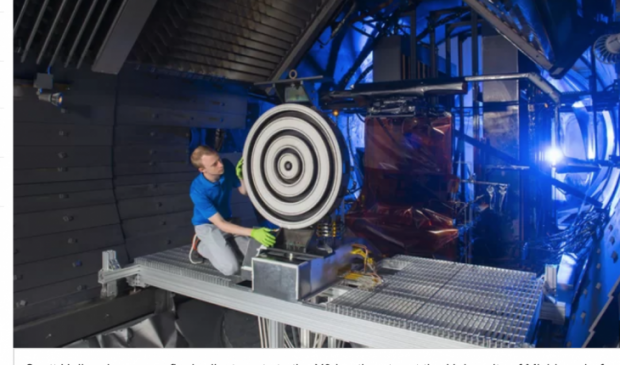
It is a Hall thruster — a system that propels spacecraft by accelerating a stream of electrically charged atoms, known as ions. In the recent demonstration conducted at NASA's Glenn Research Center in Ohio, the X3 broke records for the maximum power output, thrust and operating current achieved by a Hall thruster to date, according to the research team at the University of Michigan and representatives from NASA.
* X3 can operate at over 100 kW of power
* operated at a huge range of power from 5 kW to 102 kW, with electrical current of up to 260 amperes.
* It generated 5.4 Newtons of thrust, which is the highest level of thrust achieved by any plasma thruster to date. The previous record was 3.3 Newtons
The maximum velocity that can be achieved by a chemical rocket is about 5 kilometers per second, a Hall thruster could get a craft up to 40 kilometers per second.
It has ten times the ISP (fuel efficiency for space) of a chemical rocket.