










Breaking News
 Walter Block Ejected From Mises Institute Over Defense Of Israel After October 7th
 The Permission Grid: A Blueprint for a Permanent Slave Class
 Banning The Export of Diesel Will Only Make A Bad Situation Worse
 SCARY, DARK, DIRECT, But Is It TRUE? You Decide
Top Tech News
 Tesla Model 3 killer charges from 10 to 97% in just 9 minutes
 World-first unpowered DNA computer sets speed record
 I Power 5 Buildings Off-Grid. Here's How
 The US government is pushing hard to get a working nuclear fission reactor into space by late 2028
 SpaceX Starmind AI in Space Radiator
 China Will Dominate Global Nuclear Energy Through 2035, Analyst Says
 These Absolutely Wild-Looking EVs Are Saudi Arabia's First Homegrown Cars
 BEYOND THE MOON: NASA plans a nuclear-powered fleet to push DEEPER into space
 Big Oil Backs Mazama's $135 Million Bet On Superhot Geothermal
 Quantum compass takes flight on Northrop's Lumberjack drone


End of the TV remote could be nigh as scientists invent technology to change channel using gestures
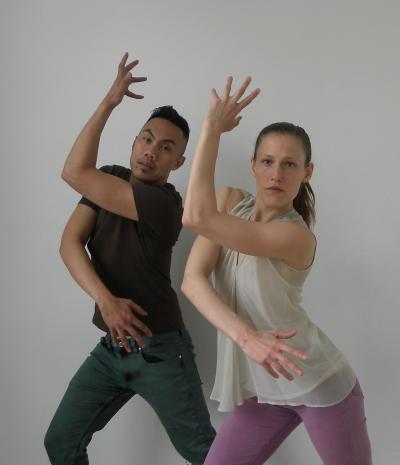
Computer scientists at Lancaster University have come up with a system that makes it possible interact with screens simply by using body movements, or waving objects.
Requiring only a simple webcam, the "Matchpoint" works by displaying moving targets that orbit a small circular "widget" in the corner of the screen.
Some televisions already recognise hand gestures, but scientists say this technology provides a lot of flexibility because it is not trained to look for a specific body part. It works even when hands are full, or while standing or slouching on the sofa.
The user synchronises hand, head or object movements with the targets to activate functions such as volume, changing channel or viewing a menu.
Team leader Christopher Clarke, a PhD student at the university's School of Computing and Communications, said: "Spontaneous spatial coupling is a new approach to gesture control that works by matching movement instead of asking the computer to recognise a specific object.