










Breaking News
 This is the future we shall bring into being
 Elon Musk's Vision For The Future Looks Like A Movie
 Phosphorus Munitions Fired by Israel Burn Groves, Orchards in Southern Lebanon
 Iran's IRGC Warns It Will Expand 'Geography of the War' If the US Attacks Again
Top Tech News
 BEYOND THE MOON: NASA plans a nuclear-powered fleet to push DEEPER into space
 Big Oil Backs Mazama's $135 Million Bet On Superhot Geothermal
 Quantum compass takes flight on Northrop's Lumberjack drone
 Terrifying AI Behavior Even Its Creators Couldn't Explain
 WW3 Near-Miss? AI Hallucinated Nuclear Weapons Components Aboard Chinese Vessel Bound For Iran
 Stripe Is Building the Toll Road for the Machine Economy
 Toyota Dakar hopeful swaps twin-turbo V6 for hydrogen fuel cells
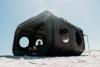 4-min turbo-inflatable cubic camp castle is now available in the USA
 Researchers Used Claude To Hack OpenAI Employee Accounts
 Chinese Scientists Develop New Oil Refining Method That Cuts Energy Use by 90%



The Walrus: the US Army contemplates building an aircraft the size of a football field

And that is what the US Army's Project Walrus is about – putting together an entire action unit of war machinery, with all the wiring and plumbing preinstalled, and placing it in the most strategic place. Whilst this would completely rewrite the way that war is conducted, the Walrus - a massive lozenge-shaped blimp the size of a football field capable of transporting 500 tons at a time - could offer solutions to myriad peacetime problems, opening land-locked countries to trade, enabling heavy construction materials to be delivered into urban centres with minimum disruption, freeing our highways of high volume, heavy loads, offering a more robust and agile air transportation network capable of absorbing disruptions due to weather or attack. Indeed, business logistics could again be completely rethought and streamlined because many physical transportation limits would no longer apply once a fleet of commercial walruses became available. The walrus does not require an airstrip and can land on water or on open ground.