










Breaking News
 This Audi EV Set A Guinness World Record By Driving 831 Miles Without Recharging
 How US and China can nimbly escape the Thucydides Trap
 Taiwan's 'silicon shield' is in a race against time
 Bond vigilantes on a savage hunt as global yields run wild
Top Tech News
 Tesla Model 3 killer charges from 10 to 97% in just 9 minutes
 World-first unpowered DNA computer sets speed record
 I Power 5 Buildings Off-Grid. Here's How
 The US government is pushing hard to get a working nuclear fission reactor into space by late 2028
 SpaceX Starmind AI in Space Radiator
 China Will Dominate Global Nuclear Energy Through 2035, Analyst Says
 These Absolutely Wild-Looking EVs Are Saudi Arabia's First Homegrown Cars
 BEYOND THE MOON: NASA plans a nuclear-powered fleet to push DEEPER into space
 Big Oil Backs Mazama's $135 Million Bet On Superhot Geothermal
 Quantum compass takes flight on Northrop's Lumberjack drone


3U Cubesat launch will be months instead of years and only $250,000 starting in 2019
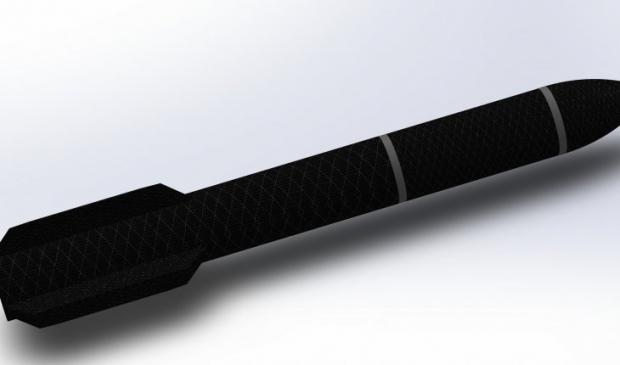
CubeCab will use standard Commercial Off The Shelf (COTS) technologies to enable less expensive and quicker launch platforms without compromising quality in order to simplify processes and bring down overall costs to launch for the customer.
For example, rather than complex cryogenic fuels and their associated hardware and insulation, our fuels are room-temperature storable. Because our rockets are small, we can 3D print most of their components in few pieces, keeping the parts count down and reliability up. And our air launch platform is the time-tested F-104, in the high-altitude mission profile it was designed for.
A CubeSat is a miniature satellite which offers all of the standard functions of a normal satellite at a fraction of the size and weight, making them cheap to build and operate, and with CubeCab, easy to get into orbit. Because they obey a common technical specification they're easy to build and parts can be easily purchased off the shelf, and because the specification is scalable in size and weight they can accomodate a wide variety of equipment, making it almost certain you'll be able to construct a satellite to suit your needs. The CubeSat is a proven design boasting hundreds of successful deployments. With the cost of construction often being under $10,000 it's easy to see why so many universities and small businesses are building them.