










Breaking News
 Evacuations begin as 'blockbuster' nor'easter barrels toward millions in 12 US states
 Trump's military prepares for Cuba as leaked Pentagon memo sends telling signal...
 Ford v. Hyundai: Henry Ford Must Be Turning In His Grave After New Report
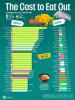 Switzerland Is Still The Most Expensive Place In The World To Eat Out
Top Tech News
 Tesla Model 3 killer charges from 10 to 97% in just 9 minutes
 World-first unpowered DNA computer sets speed record
 I Power 5 Buildings Off-Grid. Here's How
 The US government is pushing hard to get a working nuclear fission reactor into space by late 2028
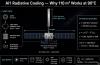 SpaceX Starmind AI in Space Radiator
 China Will Dominate Global Nuclear Energy Through 2035, Analyst Says
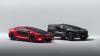 These Absolutely Wild-Looking EVs Are Saudi Arabia's First Homegrown Cars
 BEYOND THE MOON: NASA plans a nuclear-powered fleet to push DEEPER into space
 Big Oil Backs Mazama's $135 Million Bet On Superhot Geothermal
 Quantum compass takes flight on Northrop's Lumberjack drone


How Students Built the World's Fastest Hyperloop
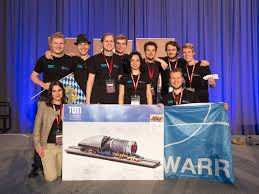
The students spent the next 20 minutes waiting anxiously as pumps sucked nearly all the air from the tube. They were the third and final team to get a run in the last stage of Elon Musk's hyperloop competition. The only criterion for winning? Speed.
When many people hear the word hyperloop, they think it's some sort of fixed product that Musk proposed five years ago. Rather, it's more a genre of transportation than a single invention. The basic concept calls for a passenger- or cargo-packed pod inside a nearly airless tube, zooming at high speeds thanks to minimal friction and air resistance. The details—whether and how to make the pod levitate, how to propel it, what shape it should be, and so on—are anyone's guess. Musk laid out some particulars in a 2013, but the people trying to bring this concept to life treat the white paper he wrote that lay out these ideas as a starting point, not gospel.