










Breaking News
 Evacuations begin as 'blockbuster' nor'easter barrels toward millions in 12 US states
 Trump's military prepares for Cuba as leaked Pentagon memo sends telling signal...
 Ford v. Hyundai: Henry Ford Must Be Turning In His Grave After New Report
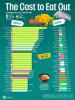 Switzerland Is Still The Most Expensive Place In The World To Eat Out
Top Tech News
 Tesla Model 3 killer charges from 10 to 97% in just 9 minutes
 World-first unpowered DNA computer sets speed record
 I Power 5 Buildings Off-Grid. Here's How
 The US government is pushing hard to get a working nuclear fission reactor into space by late 2028
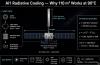 SpaceX Starmind AI in Space Radiator
 China Will Dominate Global Nuclear Energy Through 2035, Analyst Says
 These Absolutely Wild-Looking EVs Are Saudi Arabia's First Homegrown Cars
 BEYOND THE MOON: NASA plans a nuclear-powered fleet to push DEEPER into space
 Big Oil Backs Mazama's $135 Million Bet On Superhot Geothermal
 Quantum compass takes flight on Northrop's Lumberjack drone


Development and launch of centimeter accurate enhanced GPS with...
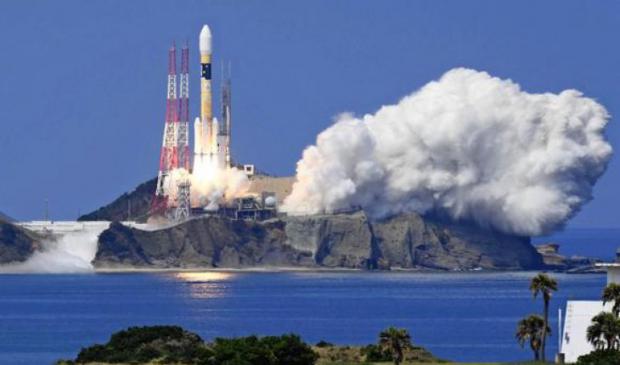
The Japanese government is eyeing 2020 to begin promoting exports of a GPS technology accurate to a several centimeters. This should help services that need pinpoint accuracy clamoring for the system.
An H-IIA rocket carrying the Michibiki No. 3 quasi-zenith satellite blasted off from the Tanegashima Space Center in Kagoshima Prefecture, southwestern Japan.
Japan's improved GPS is expected to prompt the development of a range of services in sectors from autonomous driving to cargo management.
The planned launch of Michibiki No. 4 in October, if successful, will complete a four-satellite constellation. That is enough for one of the satellites to be above much of Asia, including Japan, at all times. Services in the region that adopt the system will be able to rely on the constellation 24 hours a day.