










Breaking News
 Evacuations begin as 'blockbuster' nor'easter barrels toward millions in 12 US states
 Trump's military prepares for Cuba as leaked Pentagon memo sends telling signal...
 Ford v. Hyundai: Henry Ford Must Be Turning In His Grave After New Report
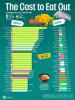 Switzerland Is Still The Most Expensive Place In The World To Eat Out
Top Tech News
 Tesla Model 3 killer charges from 10 to 97% in just 9 minutes
 World-first unpowered DNA computer sets speed record
 I Power 5 Buildings Off-Grid. Here's How
 The US government is pushing hard to get a working nuclear fission reactor into space by late 2028
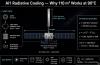 SpaceX Starmind AI in Space Radiator
 China Will Dominate Global Nuclear Energy Through 2035, Analyst Says
 These Absolutely Wild-Looking EVs Are Saudi Arabia's First Homegrown Cars
 BEYOND THE MOON: NASA plans a nuclear-powered fleet to push DEEPER into space
 Big Oil Backs Mazama's $135 Million Bet On Superhot Geothermal
 Quantum compass takes flight on Northrop's Lumberjack drone


Intel's new 8th generation Core processors launch today with revised Kaby Lake chips
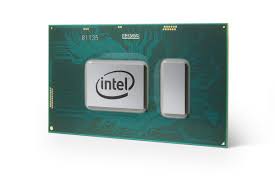
Intel announced its latest eighth-generation Core processors today, and is promising that the new chips will offer up to a 40 percent speed boost over the previous seventh-generation Kaby Lake chips.
The eighth-generation chips will be doing things a little differently from other generations. In the past, Intel has either used generational steps for introducing new chip architectures (say, the jump from 22nm to 14nm between Haswell and Broadwell) or to offer an improved version of the previous generation's architecture (like Skylake, which was an upgraded version of the 14nm node).
The eighth-generation chips, for the first time in the Core line will be doing a mixture of both. Getting announced today is a refreshed version of the Kaby Lake architecture that makes up the seventh-generation processors (built on the 14nm+ technology node), but later releases in the eight generation will offer the upcoming 14++ (Coffee Lake) and 10nm (Cannon Lake) technologies, too.