










Breaking News
 'UNFAIR': Mamdani's city-run grocer plan SLAPPED with lawsuit
 Trump Says If Iran Had a Nuclear Weapon, He Would Have Politely Called the Supreme Leader...
 Tucker Carlson: We are on the brink of a world war that ends with the use of nuclear weapons
 Who is trying to destroy the United States and the world?
Top Tech News
 NASA Super Light Solar Sail Project Will Be 12-40 Times Lighter and Faster
 Space Telescope Interferometer to Image Exoplanet Continents
 Twenty-five years of "temporary": how 9/11 built a surveillance state Americans never vote
 I'll Never Buy Another WALMART Battery!
 Shoei GT-Air 3 Smart helmet drops with built-in AR for $1,500
 Freezable titanium plate keeps your cooler chilled way longer than ice packs
 Review: Affordable thermal device is made for discovering life outdoors
 AI Whistleblower Tells Tucker How AI Could Kill All Humans by 2040
 You Hate Flock? Well There's More...
 Will Spiking Diesel Prices Drive Autonomous Trucking?



Musk Will Build His Own Hyperloop For New York To D.C. 29-Minute Transit
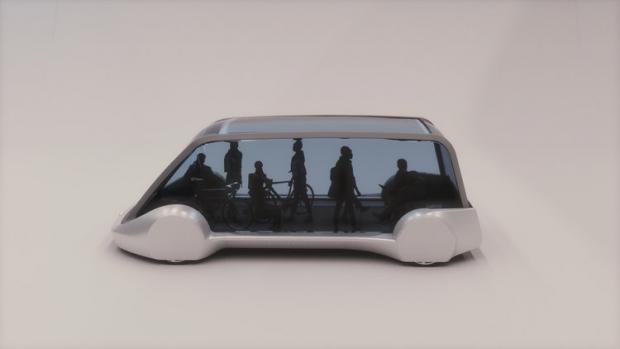
It's fantastic that Musk is ready to dive back into the hyperloop plan first hand, and push it forward at a faster rate. However, it stands to complicate the issue for the other three companies that have taken on the project and invested quite an amount of time and money thus far.
Musk shared a substantial white paper on the topic in 2013. He had drafted it with his team at Space Exploration Technologies Corp. At the time, Musk made it clear that the plans were to function as a free starting point for any company or individuals that had the wherewithal to attempt to move it forward. He shared on a conference call:
"I don't have any plan to execute because I must remain focused on SpaceX and Tesla."
In the simplest of terms, the hyperloop is a future form of transportation, which relies on a pressurized vacuum tube to move a suspended pod through at incredible speeds. Due to the lack of air resistance and friction, Musk's plan showed the potential for travel over 700 miles per hour.