










Breaking News
 'UNFAIR': Mamdani's city-run grocer plan SLAPPED with lawsuit
 Trump Says If Iran Had a Nuclear Weapon, He Would Have Politely Called the Supreme Leader...
 Tucker Carlson: We are on the brink of a world war that ends with the use of nuclear weapons
 Who is trying to destroy the United States and the world?
Top Tech News
 NASA Super Light Solar Sail Project Will Be 12-40 Times Lighter and Faster
 Space Telescope Interferometer to Image Exoplanet Continents
 Twenty-five years of "temporary": how 9/11 built a surveillance state Americans never vote
 I'll Never Buy Another WALMART Battery!
 Shoei GT-Air 3 Smart helmet drops with built-in AR for $1,500
 Freezable titanium plate keeps your cooler chilled way longer than ice packs
 Review: Affordable thermal device is made for discovering life outdoors
 AI Whistleblower Tells Tucker How AI Could Kill All Humans by 2040
 You Hate Flock? Well There's More...
 Will Spiking Diesel Prices Drive Autonomous Trucking?



Luxembourg's New Law Lets Space Miners Keep Their Plunder
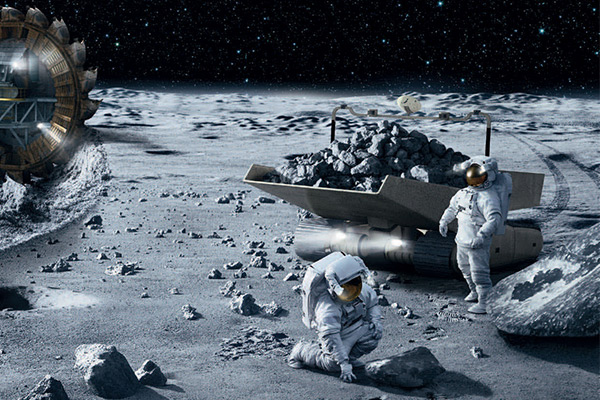
It might have seemed strange for the tiny state's money man to solicit meetings with cosmic researchers, but Luxembourg is always on the lookout for its next big investment. So when the center's director, Pete Worden, began to talk about space mining—extracting water, ore, precious metals, alien time capsules, and whatever else from the likes of asteroids—Schneider listened.
"I thought this was all science fiction," says Schneider. But Worden convinced him there was a whole cosmic economy to build, one that could extend from the moon to Mars. That same year, two guys founded a space prospecting company called Planetary Resources. And in January 2013, another, named Deep Space Industries—headquartered inside NASA's Ames campus—was born. Soon, Schneider saw the same future they did. "The question was not if that all would happen, but when," he says. "And there I saw a huge opportunity for Luxembourg."