










Breaking News
 The Evil Within, Part 4: The Welfare State
 Watch Live: Jack Smith Testifies Before Senate Judiciary Committee
 This Invisible Thing Hitting Your Brain Every Day Could Be Why You Suffer From Brain Fog...
 Pete Hegseth unleashes on military high command with massive PURGE of generals amid Iran war
Top Tech News
 Tesla Model 3 killer charges from 10 to 97% in just 9 minutes
 World-first unpowered DNA computer sets speed record
 I Power 5 Buildings Off-Grid. Here's How
 The US government is pushing hard to get a working nuclear fission reactor into space by late 2028
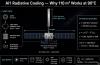 SpaceX Starmind AI in Space Radiator
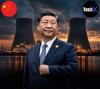 China Will Dominate Global Nuclear Energy Through 2035, Analyst Says
 These Absolutely Wild-Looking EVs Are Saudi Arabia's First Homegrown Cars
 BEYOND THE MOON: NASA plans a nuclear-powered fleet to push DEEPER into space
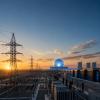 Big Oil Backs Mazama's $135 Million Bet On Superhot Geothermal
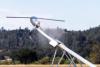 Quantum compass takes flight on Northrop's Lumberjack drone


China producing 60 gigawatts of solar panels this year up 25%
China was expected to produce solar panels with a combined capacity of 60 gigawatts (GW) this year, said Wang Bohua, secretary general of China's photovoltaic industry association.
China produced panels with capacity of 48 GW in 2016.
The United States has told the World Trade Organization it was considering putting emergency "safeguard" tariffs on imported solar cells, a move aimed at shielding its industry from a damaging, unforeseen surge in imports.
The United States has been vying with China and India to become a market leader in an industry where production costs have tumbled, favoring producers of scale.
China had a total of 101.82 GW installed solar capacity by June, after adding 24.4 GW in the first six months of 2017, the industry association said. It will soon reach 110 GW, the target Beijing had aimed to achieved by 2020.
China generates about one terawatt hour per year per gigawatt of solar. China will generate about 6200 TWh in 2017 and 6500 TWh in 2018.
China generates about seven terawatt hours per year per gigawatt of nuclear.
China generates about four terawatt hours per year per gigawatt of coal.