










Breaking News
 'UNFAIR': Mamdani's city-run grocer plan SLAPPED with lawsuit
 Trump Says If Iran Had a Nuclear Weapon, He Would Have Politely Called the Supreme Leader...
 Tucker Carlson: We are on the brink of a world war that ends with the use of nuclear weapons
 Who is trying to destroy the United States and the world?
Top Tech News
 NASA Super Light Solar Sail Project Will Be 12-40 Times Lighter and Faster
 Space Telescope Interferometer to Image Exoplanet Continents
 Twenty-five years of "temporary": how 9/11 built a surveillance state Americans never vote
 I'll Never Buy Another WALMART Battery!
 Shoei GT-Air 3 Smart helmet drops with built-in AR for $1,500
 Freezable titanium plate keeps your cooler chilled way longer than ice packs
 Review: Affordable thermal device is made for discovering life outdoors
 AI Whistleblower Tells Tucker How AI Could Kill All Humans by 2040
 You Hate Flock? Well There's More...
 Will Spiking Diesel Prices Drive Autonomous Trucking?



Volvo Plans to Go Electric, to Abandon Conventional Car Engine by 2019
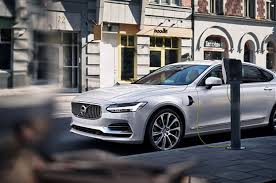
For Volvo the internal combustion engine has run its course.
In the face of competition from upstarts like Tesla Inc., which begins production this week of its new mass-market Model 3 electric battery-powered family car, the Chinese-owned automotive group on Wednesday said all new Volvo models from 2019 would be either fully electric or a hybrid.
Volvo is the first major auto maker to abandon the technology that has powered the industry for more than a century. Hakan Samuelsson, president and chief executive of Volvo Cars, said in a statement that the move "marks the end of the solely combustion engine-powered car," reiterating his target of selling one million electric cars and hybrids by 2025. "When we said it, we meant it. This is how we are going to do it."
Volvo also said it would launch five new electric and hybrid vehicles between 2019 and 2021. Two of the new models would be built by Polestar, the performance-car unit that Volvo is spinning off as a "separately branded electrified global high performance car company." Volvo Cars would build the other three models. No further details were available.
All major auto makers are preparing for a shift to electric vehicles, but the challenge for the industry is to get the timing right because of the industry's typically long product cycles that involve years of research and development before a vehicle rolls off the assembly line.
Auto executives talk about an impending "tipping point" when the costs of some electric car models are expected to fall below the cost of the conventional version of the same vehicle type. When that happens, industry executives and analysts say momentum could shift quickly in favor of electric cars.