










Breaking News
 EG4 Power Pro VS Ruixu Lithi VS Yixiang Budget Battery! Best Selling Battery Showdown!
 When Society Breaks: The Human Threats You'll Face in a Real SHTF Collapse
 Dubai-Based Emirates Airline Adds Bitcoin and Crypto Payments
 Oh My F#@!ing God, They're Doing It Again
Top Tech News
 What could possibly go wrong? Scientists use AI to design new viruses
 Dual-motor suitcase drive underpins 3,000-hp hypercar
 DoorDash Wins Federal Approval To Fly Its Own Delivery Drones
 Shade-Resistant Solar Cells Retain 97% Efficiency After 2,000 Hours of Testing
 20 Ancient Engineering SECRETS
 Stonehenge Was Reanalyzed by AI -- And the Findings Are Hard to Explain
 After Years Of Delays, Aptera Is Finally Preparing To Build Customer Cars
 'When you kill it, it doesn't die': the jellyfish that has cracked the secret of immorta
 Archer Aviation debuts Halo autonomous VTOL, Thunder's commercial twin
 US Telecoms Slide On Starlink Mobile Threat; Bernstein Sees It As A "Jab, But No Knockout Yet**



MIT Has Developed Colour-Changing Tattoo Ink That Monitors Your Health in Real Time
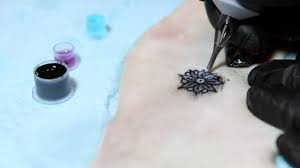
Researchers have developed a new colour-changing tattoo ink that responds to changes in the body, such as blood sugar and sodium levels.
Using a liquid with biosensors instead of traditional ink, scientists want to turn the surface of the human skin into an "interactive display" - an idea that makes this proof-of-concept an exciting one to watch. Technology like this could become a revolutionary new way to monitor health.
The project, called DermalAbyss, is a collaboration between researchers from MIT and Harvard Medical School, combining efforts from Fluid Interfaces and biotechnology.
So far, the team has developed three different inks that shift colour in response to changes in interstitial fluid - the stuff that sloshes around between our cells, comprising some 16 percent of the human body weight.