










Breaking News
 Democrats Celebrate El-Sayed Victory By Firing AK-47s Into The Air
 Who Decides What Makes A "Good" School?
 US DOJ relying on anonymous Israeli intel agent to convict US resident of Oct 7 participation
 Tensions Flicker into Flame, Lapping Across the Middle East
Top Tech News
 Voyager 1 approaches one light day from Earth
 Visual Implants
 Renewable Energy Breakthrough! World's Most Efficient Tesla Turbine System
 I Told You So
 Meet Sunbird, a nuclear fusion-powered space tug concept from Pulsar Fusion.
 China and Russia launch 29-nation AI alliance to rival western control of technology
 BREAKING: China has begun manufacturing domestically developed Immersion Deep...
 Idaho's High Desert Becomes Hot Spot For Nuclear Power Revolution
 The World's Largest Electric Aircraft Is About to Take Its First Flight
 Tesla Cybercabs and Superchargers Will Act as Mini Cell Towers for SpaceX Starlink



Schools Tap Secret Spectrum to Beam Free Internet to Students
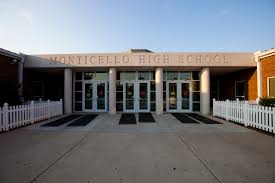
The floor-to-ceiling glass wall between the high-tech fabrication lab and the hallway at Monticello High School in Albemarle County, Virginia, is meant to showcase the hands-on, self-directed learning done there.
"I give the kids access to all the tools pretty much right off the bat," said Eric Bredder, with a sweeping gesture taking in the computer workstations, 3-D printers, laser cutters and milling machines, plus a bevy of wood and metalworking tools that he uses while teaching computer science, engineering and design classes. But Bredder can't give students the tool he considers most indispensable to 21st-century learning—broadband internet beyond school walls.
"This is an equity issue," said Bredder. "If some kids can go home and learn, discover and backfill information, while other kids' learning stops at school, that's a huge problem."
Whether it's used for homework-assignment web searches, streamed video tutorials, educational apps or collaborative multimedia projects, fast internet at home is rapidly turning into a necessity for America's students. Yet, according to a 2015 report by the Pew Research Center, about five million households with school-aged children are mired in the so-called homework gap, because they can't afford broadband or they live in underserved rural areas, such as the expanse of farms and hillside vineyards of this Virginia district spreading south from Charlottesville to the small town of Scottsville along a bend in the James River.