










Breaking News
 Is Big Pharma Selling Postpartum Depression to New Moms?
 Make Men Men Again: Low T Is Now a National Defense Problem
 Druski: They're Lying To You About Overnight Success!
 $6.27 Diesel Just Hit Harvest. The Grocery Aisle Hasn't Felt It Yet.
Top Tech News
 Tesla Model 3 killer charges from 10 to 97% in just 9 minutes
 World-first unpowered DNA computer sets speed record
 I Power 5 Buildings Off-Grid. Here's How
 The US government is pushing hard to get a working nuclear fission reactor into space by late 2028
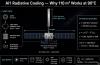 SpaceX Starmind AI in Space Radiator
 China Will Dominate Global Nuclear Energy Through 2035, Analyst Says
 These Absolutely Wild-Looking EVs Are Saudi Arabia's First Homegrown Cars
 BEYOND THE MOON: NASA plans a nuclear-powered fleet to push DEEPER into space
 Big Oil Backs Mazama's $135 Million Bet On Superhot Geothermal
 Quantum compass takes flight on Northrop's Lumberjack drone


The First Space-Based 'Nation' Wants to Store Data Off-Planet, Beyond the Law

Self-proclaimed 'space nation' Asgardia will launch a satellite later this year to test the concept of long-term data storage in orbit around the Earth. This potentially opens the door to off-planet data and tax havens, according to filings obtained by Motherboard, and represents an important step towards the group's proclaimed goal of starting a private nation in space.
In October 2016, an international team of scientists and researchers led by Russian businessman and computer scientist Igor Ashurbeyli announced the founding of Asgardia. The wannabe private nation hopes to eventually fly inhabited space stations, to protect the Earth from extraterrestrial threats like asteroids, and to create a demilitarized and freely accessible base of scientific knowledge permanently in orbit.
So far, over 180,000 Earthlings have pledged allegiance to this hypothetical orbital country by filling out a citizenship form online.