










Breaking News
 Is Big Pharma Selling Postpartum Depression to New Moms?
 Make Men Men Again: Low T Is Now a National Defense Problem
 Druski: They're Lying To You About Overnight Success!
 $6.27 Diesel Just Hit Harvest. The Grocery Aisle Hasn't Felt It Yet.
Top Tech News
 Tesla Model 3 killer charges from 10 to 97% in just 9 minutes
 World-first unpowered DNA computer sets speed record
 I Power 5 Buildings Off-Grid. Here's How
 The US government is pushing hard to get a working nuclear fission reactor into space by late 2028
 SpaceX Starmind AI in Space Radiator
 China Will Dominate Global Nuclear Energy Through 2035, Analyst Says
 These Absolutely Wild-Looking EVs Are Saudi Arabia's First Homegrown Cars
 BEYOND THE MOON: NASA plans a nuclear-powered fleet to push DEEPER into space
 Big Oil Backs Mazama's $135 Million Bet On Superhot Geothermal
 Quantum compass takes flight on Northrop's Lumberjack drone


VTOL drone could soar across Canada using lakes as pitstops
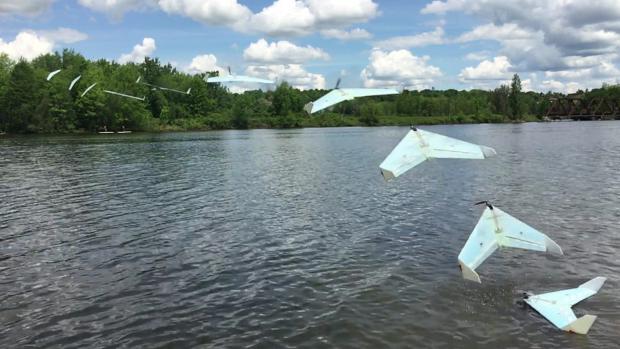
A team of Canadian scientists has come up with a solution to these shortcomings, with a drone that can land and take off again on water and possibly stop to charge itself with solar power in between flights.
Indeed a drone that could take off vertically like a chopper and soar like a plane once it's in the air, offering greater range and payload capacity, would be a huge step forward for drone technology. Last year we saw researchers from the Delft University of Technology demonstrate a drone that does just that on dry land, intended to deliver medical supplies to tough-to-reach areas.
The Sherbrooke University Water-Air VEhicle (SUWAVE), developed by researchers from that very institution, instead operates on water, and it does so with good reason. This allows it to essentially crash land on the surface of a lake, with testing showing that it can endure those impacts, and then use a clever mechanism to launch itself into the air again.