










Breaking News
 Is Big Pharma Selling Postpartum Depression to New Moms?
 Make Men Men Again: Low T Is Now a National Defense Problem
 Druski: They're Lying To You About Overnight Success!
 $6.27 Diesel Just Hit Harvest. The Grocery Aisle Hasn't Felt It Yet.
Top Tech News
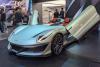 Tesla Model 3 killer charges from 10 to 97% in just 9 minutes
 World-first unpowered DNA computer sets speed record
 I Power 5 Buildings Off-Grid. Here's How
 The US government is pushing hard to get a working nuclear fission reactor into space by late 2028
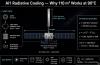 SpaceX Starmind AI in Space Radiator
 China Will Dominate Global Nuclear Energy Through 2035, Analyst Says
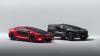 These Absolutely Wild-Looking EVs Are Saudi Arabia's First Homegrown Cars
 BEYOND THE MOON: NASA plans a nuclear-powered fleet to push DEEPER into space
 Big Oil Backs Mazama's $135 Million Bet On Superhot Geothermal
 Quantum compass takes flight on Northrop's Lumberjack drone


The Father of Android Is Back, and He's Built the Anti-iPhone
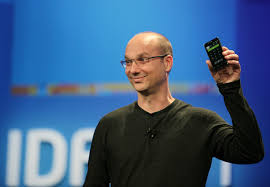
Andy Rubin wasn't ready to retire when he left Google in 2014. He certainly could have: After an illustrious career developing some of the most innovative products in tech, he had all the wealth and accolades anyone could want. As an engineer at the Apple spinoff General Magic, he built some of the world's first internet-connected portable devices. As CEO at Danger, he created the Sidekick, a smartphone that defined the category before anyone had invented the term. And then, of course, Rubin created Android, the operating system found in more than two billion phones, televisions, cars, and watches.
But Rubin wasn't done. More to the point, he couldn't be done. Ask around, and everyone says the same thing: Andy Rubin sees the future, and can't sit around waiting for it to arrive. He's spent the past few years watching Apple and Google and everyone else try to rule the world from walled gardens, and he considers that a dead end. Rubin has always believed that the open platform is the one that wins.
Most people complain that there's no innovation in smartphones. Andy Rubin disagrees. Vehemently.
And so he's back, as the CEO of Essential Products, his first company since Android. He wants to make Essential the first great gadget maker since Apple, one that builds and distributes the open platform that will power the billions of phones, watches, light bulbs, and toaster ovens about to come online.
That wasn't always the plan. Rubin likes telling a story from just after he left Google, where he spent a decade running Android and a few years leading its robotics projects. Over dinner and wine, he and his wife, Rie, discussed his next move. "How do I top Android?" Rubin asked. "What could I possibly do that would be bigger than that?" "Don't do one thing," Rie replied. "Do 10." And so Rubin launched Playground, a venture capital firm where a few dozen engineers and designers at Playground Studios help startups build stuff.
Rubin and his partners sought out a wide range of investments. "You meet a ton of people, thousands of people," he says. "Some really crazy ideas, some pretty good ideas, some