










Breaking News
 Is Big Pharma Selling Postpartum Depression to New Moms?
 Make Men Men Again: Low T Is Now a National Defense Problem
 Druski: They're Lying To You About Overnight Success!
 $6.27 Diesel Just Hit Harvest. The Grocery Aisle Hasn't Felt It Yet.
Top Tech News
 Tesla Model 3 killer charges from 10 to 97% in just 9 minutes
 World-first unpowered DNA computer sets speed record
 I Power 5 Buildings Off-Grid. Here's How
 The US government is pushing hard to get a working nuclear fission reactor into space by late 2028
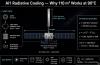 SpaceX Starmind AI in Space Radiator
 China Will Dominate Global Nuclear Energy Through 2035, Analyst Says
 These Absolutely Wild-Looking EVs Are Saudi Arabia's First Homegrown Cars
 BEYOND THE MOON: NASA plans a nuclear-powered fleet to push DEEPER into space
 Big Oil Backs Mazama's $135 Million Bet On Superhot Geothermal
 Quantum compass takes flight on Northrop's Lumberjack drone


Quantum computing closer to reality with new materials

Working with collaborators worldwide, they have recently tested three different approaches to the problem, one of which can operate at room temperature – a critical step if quantum computing is going to become a practical tool.
In all three cases the group started with semiconductor crystals, material with a regular atomic lattice like the girders of a skyscraper. By slightly altering this lattice, they sought to create a structure in which the atomic forces exerted by the material could confine a spinning electron.
"We are trying to develop the basic working unit of a quantum chip, the equivalent of the transistor on a silicon chip," Vuckovic said.
One way to create this laser-electron interaction chamber is through a structure known as a quantum dot. Physically, the quantum dot is a small amount of indium arsenide inside a crystal of gallium arsenide. The atomic properties of the two materials are known to trap a spinning electron.