










Breaking News
 Is Big Pharma Selling Postpartum Depression to New Moms?
 Make Men Men Again: Low T Is Now a National Defense Problem
 Druski: They're Lying To You About Overnight Success!
 $6.27 Diesel Just Hit Harvest. The Grocery Aisle Hasn't Felt It Yet.
Top Tech News
 Tesla Model 3 killer charges from 10 to 97% in just 9 minutes
 World-first unpowered DNA computer sets speed record
 I Power 5 Buildings Off-Grid. Here's How
 The US government is pushing hard to get a working nuclear fission reactor into space by late 2028
 SpaceX Starmind AI in Space Radiator
 China Will Dominate Global Nuclear Energy Through 2035, Analyst Says
 These Absolutely Wild-Looking EVs Are Saudi Arabia's First Homegrown Cars
 BEYOND THE MOON: NASA plans a nuclear-powered fleet to push DEEPER into space
 Big Oil Backs Mazama's $135 Million Bet On Superhot Geothermal
 Quantum compass takes flight on Northrop's Lumberjack drone


Is it a bird? Is it a plane? Flying car to go on sale
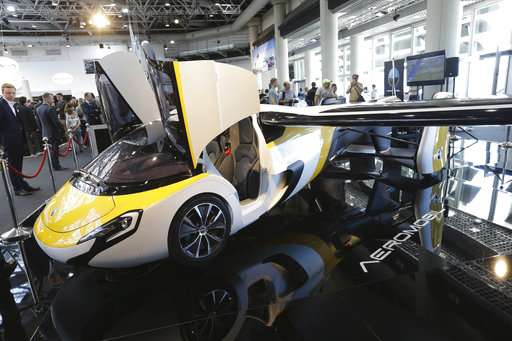
A Slovakian company called AeroMobil unveiled on Thursday its version of a flying car, a light-framed plane whose wings can fold back, like an insect, and is boosted by a hybrid engine and rear propeller.
It will be available to preorder as soon as this year but is not for everyone: besides the big price tag—between 1.2 million and 1.5 million euros ($1.3 million-$1.6 million)—you'd need a pilot's license to use it in the air.
"I think it's going to be a very niche product," said Philip Mawby, professor of electronic engineering and head of research at the University of Warwick.
Several companies are working on flying cars, either like Aeromobil's two-seater that needs a runway, or others that function more like helicopters, lifting off vertically. But not many companies are seriously looking at marketing these vehicles anytime soon, Mawby said.