










Breaking News
 Is Big Pharma Selling Postpartum Depression to New Moms?
 Make Men Men Again: Low T Is Now a National Defense Problem
 Druski: They're Lying To You About Overnight Success!
 $6.27 Diesel Just Hit Harvest. The Grocery Aisle Hasn't Felt It Yet.
Top Tech News
 Tesla Model 3 killer charges from 10 to 97% in just 9 minutes
 World-first unpowered DNA computer sets speed record
 I Power 5 Buildings Off-Grid. Here's How
 The US government is pushing hard to get a working nuclear fission reactor into space by late 2028
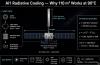 SpaceX Starmind AI in Space Radiator
 China Will Dominate Global Nuclear Energy Through 2035, Analyst Says
 These Absolutely Wild-Looking EVs Are Saudi Arabia's First Homegrown Cars
 BEYOND THE MOON: NASA plans a nuclear-powered fleet to push DEEPER into space
 Big Oil Backs Mazama's $135 Million Bet On Superhot Geothermal
 Quantum compass takes flight on Northrop's Lumberjack drone


Umbilical cord blood from babies could help bring back memory for dementia patients

Dementia patients have been offered hope that their memory could be repaired after scientists showed that injecting blood from the umbilical cords of human babies restores brain function.
Researchers at Stanford University School of Medicine in the US discovered that cord blood contains an important protein which vanishes as humans get older. It is believed the protein encourages neuroplasticity in the brain, allowing neurons to adapt and communicate more effectively.
When human cord blood was injected into elderly mice they performed far better in learning and memory tests and even started nesting again, gathering up cotton wads to make beds, an instinctive behaviour that is largely forgotten in old age.
Alzheimer's Society head of research Dr James Pickett said: "Everyone experiences some decline in memory as they get older. The possibility that this process can be reversed by an infusion of young blood sounds like the stuff of science fiction, but this is what the study is beginning to show."
"This study finds that a factor in human umbilical cord blood can enter the brain and restore some of the processes that are essential for forming new memories."