










Breaking News
 Is Big Pharma Selling Postpartum Depression to New Moms?
 Make Men Men Again: Low T Is Now a National Defense Problem
 Druski: They're Lying To You About Overnight Success!
 $6.27 Diesel Just Hit Harvest. The Grocery Aisle Hasn't Felt It Yet.
Top Tech News
 Tesla Model 3 killer charges from 10 to 97% in just 9 minutes
 World-first unpowered DNA computer sets speed record
 I Power 5 Buildings Off-Grid. Here's How
 The US government is pushing hard to get a working nuclear fission reactor into space by late 2028
 SpaceX Starmind AI in Space Radiator
 China Will Dominate Global Nuclear Energy Through 2035, Analyst Says
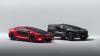 These Absolutely Wild-Looking EVs Are Saudi Arabia's First Homegrown Cars
 BEYOND THE MOON: NASA plans a nuclear-powered fleet to push DEEPER into space
 Big Oil Backs Mazama's $135 Million Bet On Superhot Geothermal
 Quantum compass takes flight on Northrop's Lumberjack drone


The Brain Chip Cometh
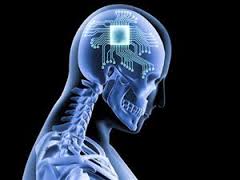
Bill Kochevar just scooped a forkful of mashed potatoes into his own mouth. No cause for celebration, you say? Well, it is when you consider that Kochevar is a quadriplegic, paralyzed below his shoulders in a cycling accident eight years ago. He hasn't scooped a forkful of mashed potatoes or anything else into his own mouth since then.
So what changed? Just the two pill-sized, 96-channel electrode arrays implanted on the surface of his brain by a team of neurosurgeons. Well, that and the 36-electrode "muscle activation system" that helps translate Kochevar's thoughts into muscular activity.
As Case Western Reserve University, which directed the research leading to this momentous forkful, explains in their press release on the case: "The arrays record brain signals created when Kochevar imagines movement of his own arm and hand. The brain-computer interface extracts information from the brain signals about what movements he intends to make, then passes the information to command the electrical stimulation system."
It's hard to dispute that this is anything short of a modern medical miracle…
…which is exactly why we're going to be hearing a lot more about these "making quadriplegics walk again" stories in the near future, and a lot less about the truly horrific potential of the brain/computer interface technologies that are slowly being revealed to the public.