










Breaking News
 Is Big Pharma Selling Postpartum Depression to New Moms?
 Make Men Men Again: Low T Is Now a National Defense Problem
 Druski: They're Lying To You About Overnight Success!
 $6.27 Diesel Just Hit Harvest. The Grocery Aisle Hasn't Felt It Yet.
Top Tech News
 Tesla Model 3 killer charges from 10 to 97% in just 9 minutes
 World-first unpowered DNA computer sets speed record
 I Power 5 Buildings Off-Grid. Here's How
 The US government is pushing hard to get a working nuclear fission reactor into space by late 2028
 SpaceX Starmind AI in Space Radiator
 China Will Dominate Global Nuclear Energy Through 2035, Analyst Says
 These Absolutely Wild-Looking EVs Are Saudi Arabia's First Homegrown Cars
 BEYOND THE MOON: NASA plans a nuclear-powered fleet to push DEEPER into space
 Big Oil Backs Mazama's $135 Million Bet On Superhot Geothermal
 Quantum compass takes flight on Northrop's Lumberjack drone


Peek inside Blue Origin's capsule for space tourists
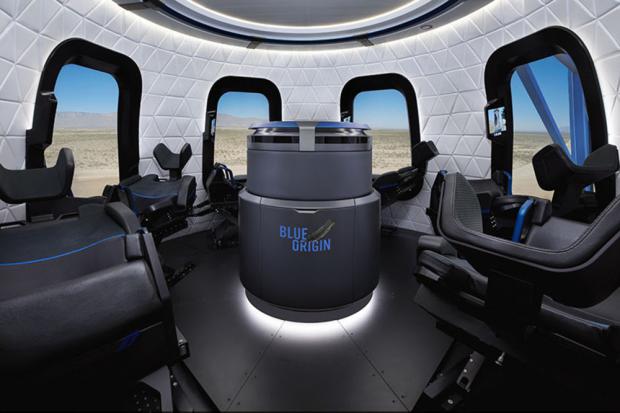
Blue Origin, the private company hoping to carry tourists into space in 2018, has unveiled the interior design for its spacecraft's cabin.
The New Shepard's layout isn't exactly mind-blowing—there's only so much variation that can be crammed into a small, gumdrop-shaped crew capsule. Although the overall shape and size are similar to other astronaut capsules (due to the physical constraints of human spaceflight), the New Shepard spacecraft does have a few notable features.
"Every seat's a window seat," Blue Origin founder Jeff Bezos wrote in an email this morning.
Windows are typically a weak spot on a spacecraft's hull, so SpaceX's Crew Dragon capsule, intended for use by NASA astronauts, contains just a few small windows. But Blue Origin's main selling point for space tourists is the view from space, so its design includes six large windows—"The largest windows ever in space," Bezos notes. The company no doubt spent a lot of money ensuring their strength and safety.