










Breaking News
 Is Big Pharma Selling Postpartum Depression to New Moms?
 Make Men Men Again: Low T Is Now a National Defense Problem
 Druski: They're Lying To You About Overnight Success!
 $6.27 Diesel Just Hit Harvest. The Grocery Aisle Hasn't Felt It Yet.
Top Tech News
 Tesla Model 3 killer charges from 10 to 97% in just 9 minutes
 World-first unpowered DNA computer sets speed record
 I Power 5 Buildings Off-Grid. Here's How
 The US government is pushing hard to get a working nuclear fission reactor into space by late 2028
 SpaceX Starmind AI in Space Radiator
 China Will Dominate Global Nuclear Energy Through 2035, Analyst Says
 These Absolutely Wild-Looking EVs Are Saudi Arabia's First Homegrown Cars
 BEYOND THE MOON: NASA plans a nuclear-powered fleet to push DEEPER into space
 Big Oil Backs Mazama's $135 Million Bet On Superhot Geothermal
 Quantum compass takes flight on Northrop's Lumberjack drone


Inside the Science Of The Engineered Human
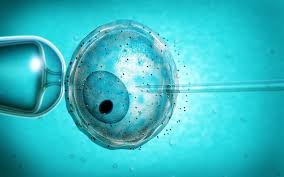
Laura Niklason is one of those pushing this boundary. During a visit, I followed one of her postdocs into a refrigerated closet in her Yale University laboratories. He reached out to a shelf and took down a jar. Unlike the amorphous piece of heart muscle Gordana Vunjak-Novakovic had showed me, there was no mistaking what was floating inside this container. It was a perfectly preserved pair of rat lungs, taken from an actual animal and "decellularized."
Like those who are engineering simpler tissue, Niklason relies on physical forces and a chemical soup to replicate the native environment of the organ and coax stem cells to mature into the kind of tissue she desires when manufacturing lungs. But she came to believe early in her efforts that science did not yet offer the technology to construct an artificial scaffolding detailed enough to emulate the shape and architecture of a real lung, a complex structure as labyrinthine as a Minotaur's maze.