










Breaking News
 Is Big Pharma Selling Postpartum Depression to New Moms?
 Make Men Men Again: Low T Is Now a National Defense Problem
 Druski: They're Lying To You About Overnight Success!
 $6.27 Diesel Just Hit Harvest. The Grocery Aisle Hasn't Felt It Yet.
Top Tech News
 Tesla Model 3 killer charges from 10 to 97% in just 9 minutes
 World-first unpowered DNA computer sets speed record
 I Power 5 Buildings Off-Grid. Here's How
 The US government is pushing hard to get a working nuclear fission reactor into space by late 2028
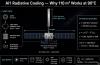 SpaceX Starmind AI in Space Radiator
 China Will Dominate Global Nuclear Energy Through 2035, Analyst Says
 These Absolutely Wild-Looking EVs Are Saudi Arabia's First Homegrown Cars
 BEYOND THE MOON: NASA plans a nuclear-powered fleet to push DEEPER into space
 Big Oil Backs Mazama's $135 Million Bet On Superhot Geothermal
 Quantum compass takes flight on Northrop's Lumberjack drone


A World Without Wi-Fi Looks Possible as Unlimited Plans Catch On

Unlimited mobile data plans, competing systems pose threats
'You could see a big switch' in consumer behavior: analyst
The Wi-Fi icon -- a dot with radio waves radiating outward -- glows on nearly every internet-connected device, from the iPhone to thermostats to TVs. But it's starting to fade from the limelight.
With every major U.S. wireless carrier now offering unlimited data plans, consumers don't need to log on to a Wi-Fi network to avoid costly overage charges anymore. That's a critical change that threatens to render Wi-Fi obsolete. And with new competitive technologies crowding in, the future looks even dimmer.
"You could see a big switch," said Tim Farrar, founder of Telecom Media Finance Associates Inc. "Your coffee shops may be less compelled to provide Wi-Fi for you now."
In an all-data-you-can-eat world, consumers' use of Wi-Fi at public places like stadiums and airports will drop to a third of all mobile data traffic from about half, Farrar estimates. This means businesses not upgrading public access Wi-Fi as often. Smartphone users might not even turn on their Wi-Fi capability, according to Barry Gilbert, an analyst at researcher Strategy Analytics in Boston.
"At Sprint Corp., where unlimited plans are the norm, customers aren't waiting until they get to a Wi-Fi hot spot to watch the latest video. They are staying on cellular," said Craig Moffett, an analyst at MoffettNathanson LLC. "Customers are rational. When pricing incentives favor Wi-Fi, customers use more Wi-Fi. When pricing incentives shift, so does behavior."
The erosion of Wi-Fi's influence is likely to be slow and uneven. While unlimited data plans make the technology less necessary for phones, many home devices, from a MacBook to an Amazon Echo, still use Wi-Fi to connect to the internet. Wi-Fi also helps fill in gaps in some office buildings and homes that have spotty cellphone coverage.
Some wireless carriers also still rely on Wi-Fi networks to handle a large portion of the growing volume of internet traffic. Putting all of that Netflix-binging and Spotify-listening on cellular networks could strain capacity.