










Breaking News
 Is Big Pharma Selling Postpartum Depression to New Moms?
 Make Men Men Again: Low T Is Now a National Defense Problem
 Druski: They're Lying To You About Overnight Success!
 $6.27 Diesel Just Hit Harvest. The Grocery Aisle Hasn't Felt It Yet.
Top Tech News
 Tesla Model 3 killer charges from 10 to 97% in just 9 minutes
 World-first unpowered DNA computer sets speed record
 I Power 5 Buildings Off-Grid. Here's How
 The US government is pushing hard to get a working nuclear fission reactor into space by late 2028
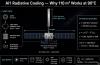 SpaceX Starmind AI in Space Radiator
 China Will Dominate Global Nuclear Energy Through 2035, Analyst Says
 These Absolutely Wild-Looking EVs Are Saudi Arabia's First Homegrown Cars
 BEYOND THE MOON: NASA plans a nuclear-powered fleet to push DEEPER into space
 Big Oil Backs Mazama's $135 Million Bet On Superhot Geothermal
 Quantum compass takes flight on Northrop's Lumberjack drone


Quantum machine learning over infinite dimensions
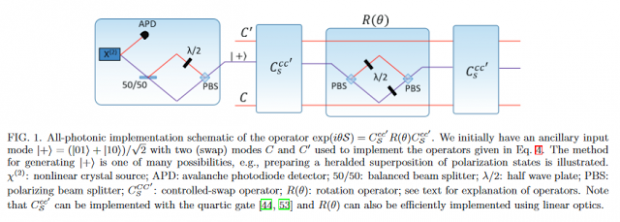
Currently, all proposals for the quantum version of machine learning utilize the finite-dimensional substrate of discrete variables. Here we generalize quantum machine learning to the more complex, but still remarkably practical, infinite-dimensional systems. Researchers present the critical subroutines of quantum machine learning algorithms for an all-photonic continuous-variable quantum computer that achieve an exponential speedup compared to their equivalent classical counterparts. Finally, they also map out an experimental implementation which can be used as a blueprint for future photonic demonstrations.
One of the biggest advantages of having a quantum machine learning algorithm for continuous variables is that it can theoretically operate much faster than classical algorithms. Since many science and engineering models involve continuous variables, applying quantum machine learning to these problems could potentially have far-reaching applications.