










Breaking News
 Is Big Pharma Selling Postpartum Depression to New Moms?
 Make Men Men Again: Low T Is Now a National Defense Problem
 Druski: They're Lying To You About Overnight Success!
 $6.27 Diesel Just Hit Harvest. The Grocery Aisle Hasn't Felt It Yet.
Top Tech News
 Tesla Model 3 killer charges from 10 to 97% in just 9 minutes
 World-first unpowered DNA computer sets speed record
 I Power 5 Buildings Off-Grid. Here's How
 The US government is pushing hard to get a working nuclear fission reactor into space by late 2028
 SpaceX Starmind AI in Space Radiator
 China Will Dominate Global Nuclear Energy Through 2035, Analyst Says
 These Absolutely Wild-Looking EVs Are Saudi Arabia's First Homegrown Cars
 BEYOND THE MOON: NASA plans a nuclear-powered fleet to push DEEPER into space
 Big Oil Backs Mazama's $135 Million Bet On Superhot Geothermal
 Quantum compass takes flight on Northrop's Lumberjack drone


Computing exponentially faster using DNA
Professor Ross D King and his team have demonstrated for the first time the feasibility of engineering a nondeterministic universal Turing machine (NUTM), and their research is to be published in the prestigious Journal of the Royal Society Interface.
* A major motivation for this work is to engineer a general-purpose way of controlling cells
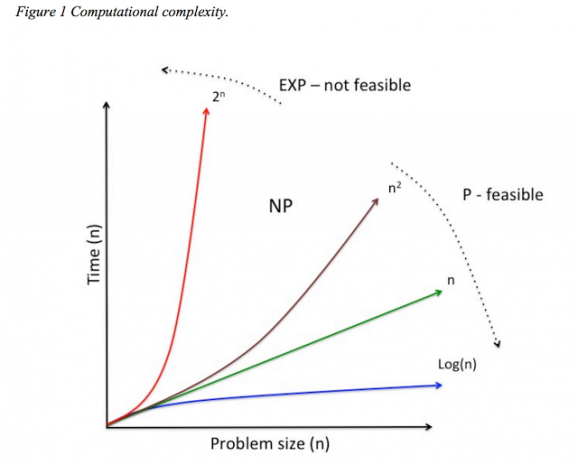
The theoretical properties of such a computing machine, including its exponential boost in speed over electronic and quantum computers, have been well understood for many years – but the Manchester breakthrough demonstrates that it is actually possible to physically create a NUTM using DNA molecules.
"Imagine a computer is searching a maze and comes to a choice point, one path leading left, the other right," explained Professor King, from Manchester's School of Computer Science. "Electronic computers need to choose which path to follow first.
"But our new computer doesn't need to choose, for it can replicate itself and follow both paths at the same time, thus finding the answer faster.