










Breaking News
 Is Big Pharma Selling Postpartum Depression to New Moms?
 Make Men Men Again: Low T Is Now a National Defense Problem
 Druski: They're Lying To You About Overnight Success!
 $6.27 Diesel Just Hit Harvest. The Grocery Aisle Hasn't Felt It Yet.
Top Tech News
 Tesla Model 3 killer charges from 10 to 97% in just 9 minutes
 World-first unpowered DNA computer sets speed record
 I Power 5 Buildings Off-Grid. Here's How
 The US government is pushing hard to get a working nuclear fission reactor into space by late 2028
 SpaceX Starmind AI in Space Radiator
 China Will Dominate Global Nuclear Energy Through 2035, Analyst Says
 These Absolutely Wild-Looking EVs Are Saudi Arabia's First Homegrown Cars
 BEYOND THE MOON: NASA plans a nuclear-powered fleet to push DEEPER into space
 Big Oil Backs Mazama's $135 Million Bet On Superhot Geothermal
 Quantum compass takes flight on Northrop's Lumberjack drone


Walking robot takes first steps into the market
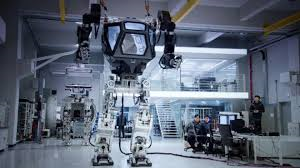
A bipedal robot will then step out, and carry a package to your front door. That scenario is envisioned by Jonathan Hurst, an associate professor of robotics at Oregon State University, and chief technology officer of spin-off company Agility Robotics. To that end, his group has developed an ostrich-like two-legged walking robot … and it's called Cassie.
First of all, Cassie isn't intended to make deliveries in its present form. It's intended more as a developmental platform, to be utilized by other robotics companies and research institutes. In other words, a Cassie-derived robot may eventually come strolling up your front walk.
The team used a previous Oregon State-designed bipedal robot, ATRIAS, as its jumping-off point when designing Cassie. "ATRIAS had motors that would work against either other, which was inefficient," notes Hurst. "With Cassie, we've fixed this problem and added steering, feet, and a sealed system, so it will work outdoors in the rain and snow as we continue with our controller testing."