










Breaking News
 Is Big Pharma Selling Postpartum Depression to New Moms?
 Make Men Men Again: Low T Is Now a National Defense Problem
 Druski: They're Lying To You About Overnight Success!
 $6.27 Diesel Just Hit Harvest. The Grocery Aisle Hasn't Felt It Yet.
Top Tech News
 Tesla Model 3 killer charges from 10 to 97% in just 9 minutes
 World-first unpowered DNA computer sets speed record
 I Power 5 Buildings Off-Grid. Here's How
 The US government is pushing hard to get a working nuclear fission reactor into space by late 2028
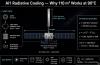 SpaceX Starmind AI in Space Radiator
 China Will Dominate Global Nuclear Energy Through 2035, Analyst Says
 These Absolutely Wild-Looking EVs Are Saudi Arabia's First Homegrown Cars
 BEYOND THE MOON: NASA plans a nuclear-powered fleet to push DEEPER into space
 Big Oil Backs Mazama's $135 Million Bet On Superhot Geothermal
 Quantum compass takes flight on Northrop's Lumberjack drone


Meet the Man Running the Only Bitcoin Node In West Africa

A Nigerian developer wants to start building the bitcoin network in the region.
Stashed away somewhere in Lagos is a lonely piece of bitcoin software. Running on a server in a data center in the Nigerian capital, it's the only reachable bitcoin node of its type not just in the country, but in almost all of West and Central Africa, without a companion for thousands of miles in every direction.
The node in Lagos is owned and run by 35 year old software developer Tim Akinbo, who said that his interest in bitcoin stems from gaps in the African financial ecosystem.
"Moving money from one country to another in Africa can be very tough," Akinbo says in a Skype call. "Right now it's easier for you to send money to the US than it is to send it to another African country. I saw bitcoin as a technology that could really change that."
Bitcoin nodes are fundamental to keeping the bitcoin network functioning: each of them is a physical or virtual machine (a self-contained computer operating system deployed alongside other programmes on a more powerful piece of hardware) running the bitcoin software in conjunction with a stored copy of the blockchain, constantly synced between them in order to maintain a decentralized database of transactions. But though the network may not have a center, certain areas still have a far greater node density: as the below chart from bitcoin mapping site bitnodes.21.co shows, North America and Western Europe have a high concentration, whereas most of Asia, Africa and South America have only a small scattering.