










Breaking News
 Joe Feltz has died at the age of 40
 Telegram CEO Pavel Durov has warned app developers after Apple briefly removed Telegram...
 Maybe The Real Story In Michigan Isn't Left vs. Right
 Martin Armstrong: Why The World Order Will Collapse in 2032 | Gold, Oil & The US Dollar
Top Tech News
 Voyager 1 approaches one light day from Earth
 Visual Implants
 Renewable Energy Breakthrough! World's Most Efficient Tesla Turbine System
 I Told You So
 Meet Sunbird, a nuclear fusion-powered space tug concept from Pulsar Fusion.
 China and Russia launch 29-nation AI alliance to rival western control of technology
 BREAKING: China has begun manufacturing domestically developed Immersion Deep...
 Idaho's High Desert Becomes Hot Spot For Nuclear Power Revolution
 The World's Largest Electric Aircraft Is About to Take Its First Flight
 Tesla Cybercabs and Superchargers Will Act as Mini Cell Towers for SpaceX Starlink



Russians Engineer a Brilliant Slot Machine Cheat--And Casinos Have No Fix
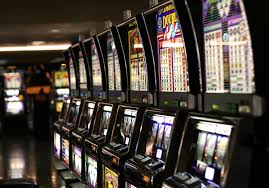
In early June 2014, accountants at the Lumiere Place Casino in St. Louis noticed that several of their slot machines had—just for a couple of days—gone haywire. The government-approved software that powers such machines gives the house a fixed mathematical edge, so that casinos can be certain of how much they'll earn over the long haul—say, 7.129 cents for every dollar played. But on June 2 and 3, a number of Lumiere's machines had spit out far more money than they'd consumed, despite not awarding any major jackpots, an aberration known in industry parlance as a negative hold. Since code isn't prone to sudden fits of madness, the only plausible explanation was that someone was cheating.
Casino security pulled up the surveillance tapes and eventually spotted the culprit, a black-haired man in his thirties who wore a Polo zip-up and carried a square brown purse. Unlike most slots cheats, he didn't appear to tinker with any of the machines he targeted, all of which were older models manufactured by Aristocrat Leisure of Australia. Instead he'd simply play, pushing the buttons on a game like Star Drifter or Pelican Pete while furtively holding his iPhone close to the screen.
He'd walk away after a few minutes, then return a bit later to give the game a second chance. That's when he'd get lucky. The man would parlay a $20 to $60 investment into as much as $1,300 before cashing out and moving on to another machine, where he'd start the cycle anew. Over the course of two days, his winnings tallied just over $21,000. The only odd thing about his behavior during his streaks was the way he'd hover his finger above the Spin button for long stretches before finally jabbing it in haste; typical slots players don't pause between spins like that.
On June 9, Lumiere Place shared its findings with the Missouri Gaming Commission, which in turn issued a statewide alert. Several casinos soon discovered that they had been cheated the same way, though often by different men than the one who'd bilked Lumiere Place. In each instance, the perpetrator held a cell phone close to an Aristocrat Mark VI model slot machine shortly before a run of good fortune.