










Breaking News
 Is Big Pharma Selling Postpartum Depression to New Moms?
 Make Men Men Again: Low T Is Now a National Defense Problem
 Druski: They're Lying To You About Overnight Success!
 $6.27 Diesel Just Hit Harvest. The Grocery Aisle Hasn't Felt It Yet.
Top Tech News
 Tesla Model 3 killer charges from 10 to 97% in just 9 minutes
 World-first unpowered DNA computer sets speed record
 I Power 5 Buildings Off-Grid. Here's How
 The US government is pushing hard to get a working nuclear fission reactor into space by late 2028
 SpaceX Starmind AI in Space Radiator
 China Will Dominate Global Nuclear Energy Through 2035, Analyst Says
 These Absolutely Wild-Looking EVs Are Saudi Arabia's First Homegrown Cars
 BEYOND THE MOON: NASA plans a nuclear-powered fleet to push DEEPER into space
 Big Oil Backs Mazama's $135 Million Bet On Superhot Geothermal
 Quantum compass takes flight on Northrop's Lumberjack drone


DWave next redesign will allow for higher connection density 4000 qubits by late 2018...
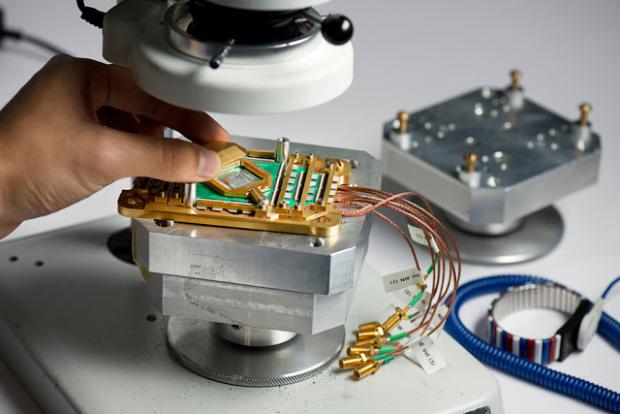
It will likely to launch within two years, the machine will again double the number of qubits, to around 4,000. Crucially, it will also provide more-complex connections between qubits, allowing it to tackle more-complicated problems.
"Changing the underlying connectivity is going to be a game-changer," says Mark Novotny, a physicist at Charles University in Prague, who is exploring a D-Wave machine's applications to cybersecurity. "I'm basically drooling hoping for it. It's very exciting."
D-Wave's latest 2000 qubit iteration includes an upgrade that Novotny has been clamoring for. The feature gives more control when different groups of qubits go through the annealing process. In at least one case, D-Wave has shown that this can speed up certain calculations 1,000-fold. For Novotny, the feature is crucial because it will allow his team to "sample" qubits during the process, which opens the door to D-Wave exploring a different type of machine-learning algorithm that could learn to recognize much more complex patterns of cyberattacks.