










Breaking News
 Is Big Pharma Selling Postpartum Depression to New Moms?
 Make Men Men Again: Low T Is Now a National Defense Problem
 Druski: They're Lying To You About Overnight Success!
 $6.27 Diesel Just Hit Harvest. The Grocery Aisle Hasn't Felt It Yet.
Top Tech News
 Tesla Model 3 killer charges from 10 to 97% in just 9 minutes
 World-first unpowered DNA computer sets speed record
 I Power 5 Buildings Off-Grid. Here's How
 The US government is pushing hard to get a working nuclear fission reactor into space by late 2028
 SpaceX Starmind AI in Space Radiator
 China Will Dominate Global Nuclear Energy Through 2035, Analyst Says
 These Absolutely Wild-Looking EVs Are Saudi Arabia's First Homegrown Cars
 BEYOND THE MOON: NASA plans a nuclear-powered fleet to push DEEPER into space
 Big Oil Backs Mazama's $135 Million Bet On Superhot Geothermal
 Quantum compass takes flight on Northrop's Lumberjack drone


A PRIVATE CHINESE SPACE COMPANY JUST SCORED FOREIGN CONTRACT FOR FIRST TIME
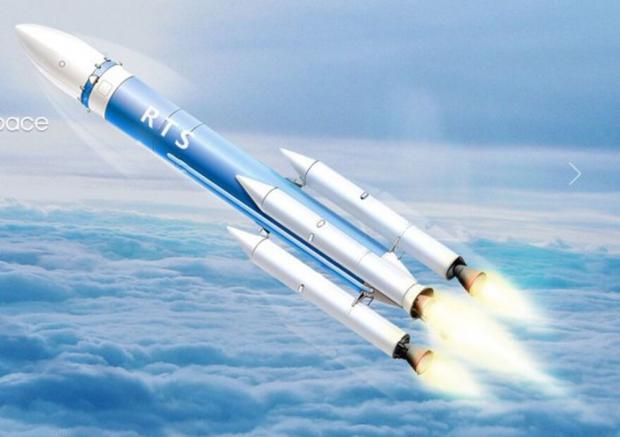

Xinhua News Agency
Rocket on a Truck
This Landspace 1 rocket can be carried on a truck for effective transportation, in order to move the launcher to precisely position nano-satellites in specific orbits.
A Chinese space launch company, Landspace, has won the first Chinese private space launch contract from a foreign company.

Gomspace
GOMX-3
GOMX-3 is a collaboration between Gomspace and ESA. It's intended to test nano-sat technologies such as attitude control, RF sensing, and high-speed data downlink. It flew in 2016.
Founded by Tsinghua University, a prestigious Chinese university, Landspace is one of China's first private space launch companies. Gomspace is a Danish satellite builder, spun off from the Alborg University's nano-satellite research program. The pair's partnership is starting small, literally, with a nanosatellite project.