










Breaking News
 No Benefits: Why Most Americans Hate The Idea Of AI Data Centers
 Are America's Youth Really Embracing Socialism?
 Are We About to See a Foreclosure WAVE Hit the US Housing Market?
 They Rolled Out the Relics - Then Cut the Working-Lands Money
Top Tech News
 World's smallest CT scanner fits in the palm of your hand
 The Tesla Roadster will blow people's minds
 Peter Thiel-Funded Company Anduril to Triple the Number of Autonomous Surveillance Towers...
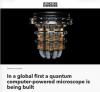 Quantum computing may soon become part of the microscope itself.
 Volkswagen Just Unveiled The Most Efficient EV Ever Tested
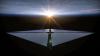 NASA Super Light Solar Sail Project Will Be 12-40 Times Lighter and Faster
 Space Telescope Interferometer to Image Exoplanet Continents
 Twenty-five years of "temporary": how 9/11 built a surveillance state Americans never vote
 I'll Never Buy Another WALMART Battery!
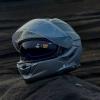 Shoei GT-Air 3 Smart helmet drops with built-in AR for $1,500



Two Google Lunar X Prize teams are going to share a ride to the Moon next year

Two of the teams competing in the Google Lunar X Prize competition have agreed to share a ride to the Moon next year. The Japanese team, HAKUTO, announced today that it will use the same rocket as the Indian group Team Indus to get its four-wheeled lunar rover to the Moon's surface. Team Indus announced last month that its spacecraft — a lunar lander and rover combo — is slated to ride on a PSLV rocket, a proven vehicle developed by the Indian Space Research Organization.
"This is a great demonstration of teams coming together."
The ride-share agreement and launch contracts have been officially verified by X Prize, which means HAKUTO can move forward in the competition. "We're proud to verify HAKUTO's launch agreement and are pleased to see two Google Lunar X Prize teams collaborating on this mission to the Moon," Chanda Gonzales-Mowrer, a senior director at Google Lunar X Prize, said in a statement. "The purpose of this prize was, in part, to foster collaboration in the private sector and this is a great demonstration of teams coming together in the next giant leap in space exploration."