










Breaking News
 The Trump White House is starting to admit that your bank account and airline tickets...
 iCloud, App Store, and other Apple services hit by ongoing outage
 Every TV and radio in the country is going to play the emergency alert tone today. Your phone won
 China used more coal in just four years than the entire world did in the coal-heavy 19th century
Top Tech News
 SpaceX Just Caught Starship on Its FIRST Attempt!
 Solid-State Cells Can Make The U.S. Competitive In Batteries Again: CEO
 Jetson ONE personal eVTOL pod is about to go full sky patrol
 America's INSANE BREAKTHROUGH Could Replace Septic Tanks Forever
 Amazing DIY Building Material for Home & Yard - Inexpensive and Easy!
 Researchers have discovered a massive deposit of hidden water...
 Amazon's Ring Unveils Flying Drone And Robot To Patrol Homes And Businesses
 Anthropic Strikes $3.4 Billion Off-Grid Power Agreement to Bypass U.S. Grids, Reports Say
 The X-ray room just shrank to the size of a laptop
 Gritt and MasTec partner to bring physical AI to solar construction sites



Exosuits and Exoskeletons will be hitting milestones and ramping up from 2017-2026
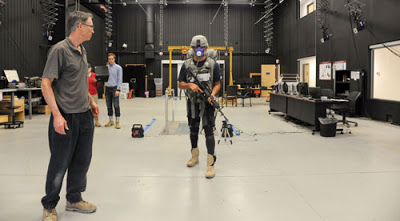
They are developing soft robotic exosuits that are designed to provide power and torque to critical body joints. At least 15 Warrior Web prototypes have been tested in laboratories and outdoor settings.
The amount of reduction depends on the individual wearing the suit, but researchers have seen greater than 10 percent in some cases, he said.
Conor Walsh, a leading robotics expert at Harvard University's Wyss Institute for Biologically Inspired Engineering, said the goal is to achieve a reduction of 25 percent or more. "The exciting thing is that you're able to now kind of say … it's possible to make it easier for a healthy person to walk when carrying a load," he said. "Now we're kind of at this next juncture … to say, 'How do we make the benefit as big as possible?'"