










Breaking News
 No Benefits: Why Most Americans Hate The Idea Of AI Data Centers
 Are America's Youth Really Embracing Socialism?
 Are We About to See a Foreclosure WAVE Hit the US Housing Market?
 They Rolled Out the Relics - Then Cut the Working-Lands Money
Top Tech News
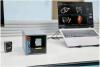 World's smallest CT scanner fits in the palm of your hand
 The Tesla Roadster will blow people's minds
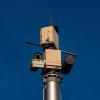 Peter Thiel-Funded Company Anduril to Triple the Number of Autonomous Surveillance Towers...
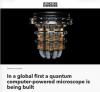 Quantum computing may soon become part of the microscope itself.
 Volkswagen Just Unveiled The Most Efficient EV Ever Tested
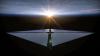 NASA Super Light Solar Sail Project Will Be 12-40 Times Lighter and Faster
 Space Telescope Interferometer to Image Exoplanet Continents
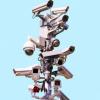 Twenty-five years of "temporary": how 9/11 built a surveillance state Americans never vote
 I'll Never Buy Another WALMART Battery!
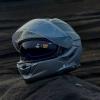 Shoei GT-Air 3 Smart helmet drops with built-in AR for $1,500



South Korea KSTAR tokamak operates in high plasma mode for a record of 70 seconds
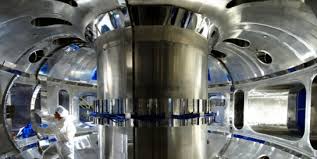
The institute, based at Daejeon, 160 km south of Seoul, said a fully non-inductive operation mode - called a "high poloidal beta scenario" - has been used to achieve this long and steady state of operation using high-power neutral beam. It said various techniques, including a rotating 3D field, have been applied to alleviate the accumulated heat fluxes on the plasma-facing components.
"The world record for high-performance plasma for more than a minute demonstrated that the KSTAR is the forefront in steady-state plasma operation technology in a superconducting device," NFRI said in a statement today. "This is a huge step forward for realization of the fusion reactor."
In addition, the institute said, KSTAR researchers also succeeded in achieving an alternative advanced plasma operation mode with the internal transport barrier (ITB).