










Breaking News
 California Declares State Of Emergency Ahead Of Strong El Niño
 'Pausing' Intensifies: OpenAI Unleashes Latest Model Minutes After Dario Dumps Magnum Opus
 Trump Calls For Diesel Export Ban After 3-Hour 'Very Productive' Iran Talks
 Wendy's faces 300 closures across 15 states due to crippling beef prices
Top Tech News
 BEYOND THE MOON: NASA plans a nuclear-powered fleet to push DEEPER into space
 Big Oil Backs Mazama's $135 Million Bet On Superhot Geothermal
 Quantum compass takes flight on Northrop's Lumberjack drone
 Terrifying AI Behavior Even Its Creators Couldn't Explain
 WW3 Near-Miss? AI Hallucinated Nuclear Weapons Components Aboard Chinese Vessel Bound For Iran
 Stripe Is Building the Toll Road for the Machine Economy
 Toyota Dakar hopeful swaps twin-turbo V6 for hydrogen fuel cells
 4-min turbo-inflatable cubic camp castle is now available in the USA
 Researchers Used Claude To Hack OpenAI Employee Accounts
 Chinese Scientists Develop New Oil Refining Method That Cuts Energy Use by 90%



Tesla Powerwall 2 Is The Best Of The Best: 30% Cheaper Than The Competition
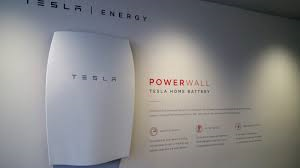
The new Tesla Powerwall 2.0 not only beats competitors, but second best model is 30% behind Tesla on price per warranted kWh under 1 cycle per day utilization.
Tesla Powerwall 2.0 (unveiling story) is 14 kWh ESS (13.5 kWh usable) with 10 years warranty, with built-in inverter (AC version) or DC converter (DC version). Up to 9 units can be installed in one system.
Having built-in inverter makes Powerwall 2.0 even more attractive compared to other ESS.
"The SolarQuotes Battery Comparison table gives the cost per warrantied kilowatt-hour for over 30 battery systems when fully cycled once per day. The results are shown in the graph below, and as you can see, both versions of the Powerwall 2 are well ahead of the closest competition.
The Powerwall 2 is almost 30% cheaper than its next closest competitor, but the comparison is actually better than the graph makes it appear because the AC version of the Powerwall 2 includes a built in battery-inverter and the DC version includes a built in DC converter while its closest competitors on cost per stored kilowatt-hour do not.