










Breaking News
 Is Big Pharma Selling Postpartum Depression to New Moms?
 Make Men Men Again: Low T Is Now a National Defense Problem
 Druski: They're Lying To You About Overnight Success!
 $6.27 Diesel Just Hit Harvest. The Grocery Aisle Hasn't Felt It Yet.
Top Tech News
 Tesla Model 3 killer charges from 10 to 97% in just 9 minutes
 World-first unpowered DNA computer sets speed record
 I Power 5 Buildings Off-Grid. Here's How
 The US government is pushing hard to get a working nuclear fission reactor into space by late 2028
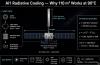 SpaceX Starmind AI in Space Radiator
 China Will Dominate Global Nuclear Energy Through 2035, Analyst Says
 These Absolutely Wild-Looking EVs Are Saudi Arabia's First Homegrown Cars
 BEYOND THE MOON: NASA plans a nuclear-powered fleet to push DEEPER into space
 Big Oil Backs Mazama's $135 Million Bet On Superhot Geothermal
 Quantum compass takes flight on Northrop's Lumberjack drone


SpaceX wants to surround Earth with an internet service that's 200 times faster
SpaceX, the aerospace company founded by the Mars-hungry tech entrepreneur Elon Musk, just made a big move to enshroud the planet in high-speed internet coverage.
On November 15, the company filed a lengthy application with the Federal Communications Commission (FCC) to launch 4,425 satellites. (We first heard about the filing through the r/SpaceX community on Reddit.) That is a hell of a lot of satellites.
According to a database compiled by the Union of Concerned Scientists, there are 1,419 active satellites currently orbiting Earth.
There are estimates of roughly 2,600 satellites that no longer work floating in space, but even factoring those in, SpaceX's planned fleet would be larger than everything already in space.
Some of the biggest telecommunications satellites can weigh several tons, be the size of a bus, and orbit from a fixed point about 35,000 km above Earth.
After we took a look at SpaceX's FCC application, though, it seems these won't be your typical telecommunications satellites.