










Breaking News
 No Benefits: Why Most Americans Hate The Idea Of AI Data Centers
 Are America's Youth Really Embracing Socialism?
 Are We About to See a Foreclosure WAVE Hit the US Housing Market?
 They Rolled Out the Relics - Then Cut the Working-Lands Money
Top Tech News
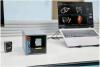 World's smallest CT scanner fits in the palm of your hand
 The Tesla Roadster will blow people's minds
 Peter Thiel-Funded Company Anduril to Triple the Number of Autonomous Surveillance Towers...
 Quantum computing may soon become part of the microscope itself.
 Volkswagen Just Unveiled The Most Efficient EV Ever Tested
 NASA Super Light Solar Sail Project Will Be 12-40 Times Lighter and Faster
 Space Telescope Interferometer to Image Exoplanet Continents
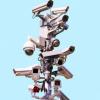 Twenty-five years of "temporary": how 9/11 built a surveillance state Americans never vote
 I'll Never Buy Another WALMART Battery!
 Shoei GT-Air 3 Smart helmet drops with built-in AR for $1,500



Wire that goes from firm to spaghetti-like could be used in shapeshifting furniture and more
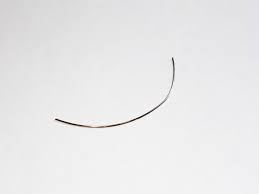
What if there was a way to retain the benefits of stiffer materials while also tapping into the field's softer side? Scientists have developed a multipurpose fiber that changes its stiffness depending on temperature, making for a highly versatile wire that could one day be used in everything from folding drones to shapeshifting furniture.
The team at the École polytechnique fédérale de Lausanne's Laboratory of Intelligent Systems has been behind some impressive robotics advances over the years. Unmanned aircraft that use wings to walk on land, a grasshopper-like robot that can leap 27 times its body size and an award-winning crash-proof robot that flies inside a spherical cage are just a few examples.
Its latest creation is a composite thread that is rigid in its natural state. At its core is a silicone tube that holds low melting point alloys inside, which remain solid at room temperature and give the fiber a stiff nature, much like a thin metal wire.