










Breaking News
 The Economist Who Predicted 2008 Explains China's Endgame
 Charlie Kirk SNAPS at Anti White Masked ANTIFA
 Episode 488: THE FAUCI FIRESTORM
 Discussion with Glen Diesen
Top Tech News
 Voyager 1 approaches one light day from Earth
 Visual Implants
 Renewable Energy Breakthrough! World's Most Efficient Tesla Turbine System
 I Told You So
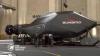 Meet Sunbird, a nuclear fusion-powered space tug concept from Pulsar Fusion.
 China and Russia launch 29-nation AI alliance to rival western control of technology
 BREAKING: China has begun manufacturing domestically developed Immersion Deep...
 Idaho's High Desert Becomes Hot Spot For Nuclear Power Revolution
 The World's Largest Electric Aircraft Is About to Take Its First Flight
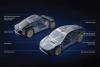 Tesla Cybercabs and Superchargers Will Act as Mini Cell Towers for SpaceX Starlink



Jedi scientists freeze light in midair to bring quantum computers a step closer to reality
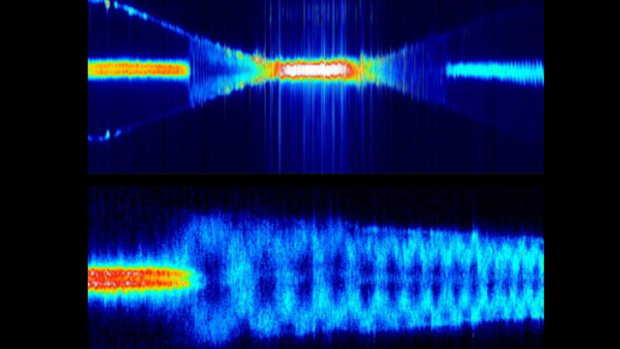
In a Canberra laboratory, physicists have managed a feat almost as magical: they froze the movement of light in a cloud of ultracold atoms. This discovery could help bring optical quantum computers from the realms of sci-fi to reality.
The experiment, published in a paper this week, was inspired by a computer stimulation run by lead researcher Jesse Everett from the Australian National University. The researchers used a vaporized cloud of ultracold rubidium atoms to create a light trap, into which they shone infrared lasers. The light trap constantly emitted and re-captured the light.
"It's clear that the light is trapped – there are photons circulating around the atoms," Everett says. "The atoms absorbed some of the trapped light, but a substantial proportion of the photons were frozen inside the atomic cloud."